Foldable Phones vs Regular Phones: Which Type Makes More Sense Today?
The smartphone industry has entered a fascinating era of innovation. While regular smartphones have reached a level of maturity, foldable phones are redefining how we interact with mobile devices. From Samsung Galaxy Z Fold to Huawei Mate X and other emerging models, foldable phones are no longer experimental—they are becoming mainstream.
But the big question remains: Do foldable phones really make sense today, or are regular smartphones still the smarter choice? In this comprehensive guide, we’ll break down everything you need to know—performance, durability, cost, usability, and future potential—to help you make the right decision.
📱 What Are Foldable Phones?
Foldable phones are smartphones with flexible displays that can bend or fold, allowing users to switch between a compact phone and a larger tablet-like screen.
Types: Book-style foldables (Galaxy Z Fold) · Clamshell foldables (Galaxy Z Flip). These devices aim to combine portability with productivity.
📟 What Are Regular Phones?
Regular smartphones are the traditional slab-style devices with a fixed screen. They dominate the market due to their reliability, affordability, and proven performance. Examples include: iPhone series, Samsung Galaxy S series, Google Pixel phones.
🔍 Key Differences Between Foldable and Regular Phones
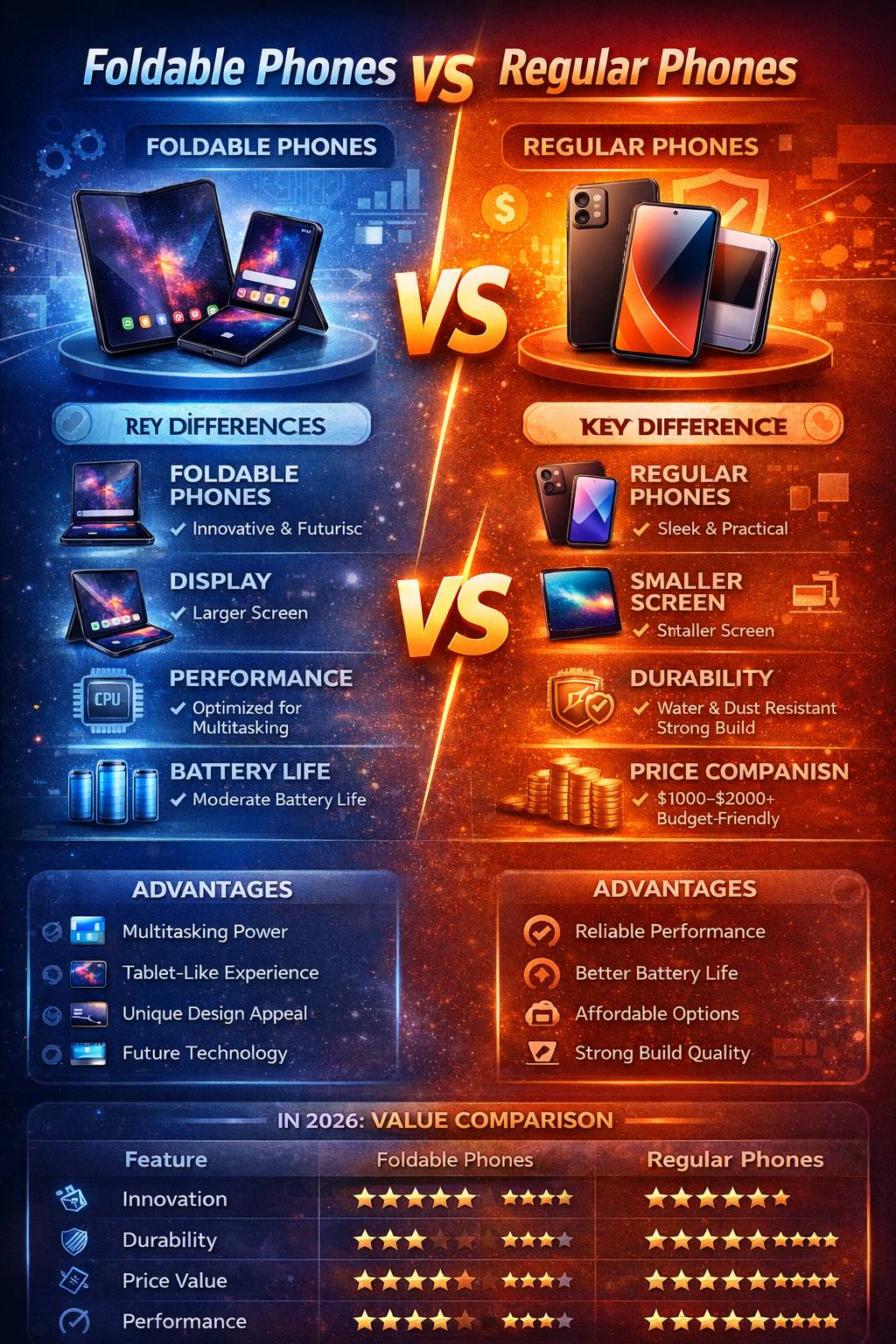
1. Design & Innovation
Foldable: Futuristic, dual-mode, premium feel. Regular: Sleek, minimal, easier to handle.
👉 Verdict: Foldables win innovation, regular win practicality
2. Display Experience
Foldable: larger unfolded screen, immersive multitasking. Regular: limited size, better consistency.
👉 Foldables offer superior viewing
3. Performance
Similar processors; foldables optimised for multitasking but slight heating. Regular more stable & better optimised. 👉 Regular slightly more reliable
4. Durability
Foldables: sensitive hinges, crease, prone to damage. Regular: strong build, water/dust resistance. 👉 Regular far more durable
5. Battery Life
Foldables larger screen consumes more. Regular longer screen-on time. 👉 Regular wins again
6. Price Comparison
Foldable $1000–2000+, regular $200–1200. 👉 Regular more affordable
✅ Foldable pros
- Multitasking power
- Tablet experience
- Unique design
- Future tech
✅ Regular pros
- Reliability
- Better battery
- Affordable
- Strong build
📊 Long-Term Value Comparison
👥 Who should buy which?
Foldable: tech enthusiasts, professionals, creators, gamers (if budget permits).
Regular: students, budget users, everyday users, durability seekers.
📅 Foldable Phones in 2026: Are They Worth It?
Stronger hinges, better displays, improved software — but not yet perfect. Foldables are evolving, not replacing regular phones completely.
🔮 Final Verdict
👉 Choose Foldable if: you want cutting-edge tech, multitask heavily, no budget constraints.
👉 Choose Regular if: you want reliability, great battery, durability, value.