Android vs iPhone for Students: Which One Gives Better Long-Term Value in 2026?
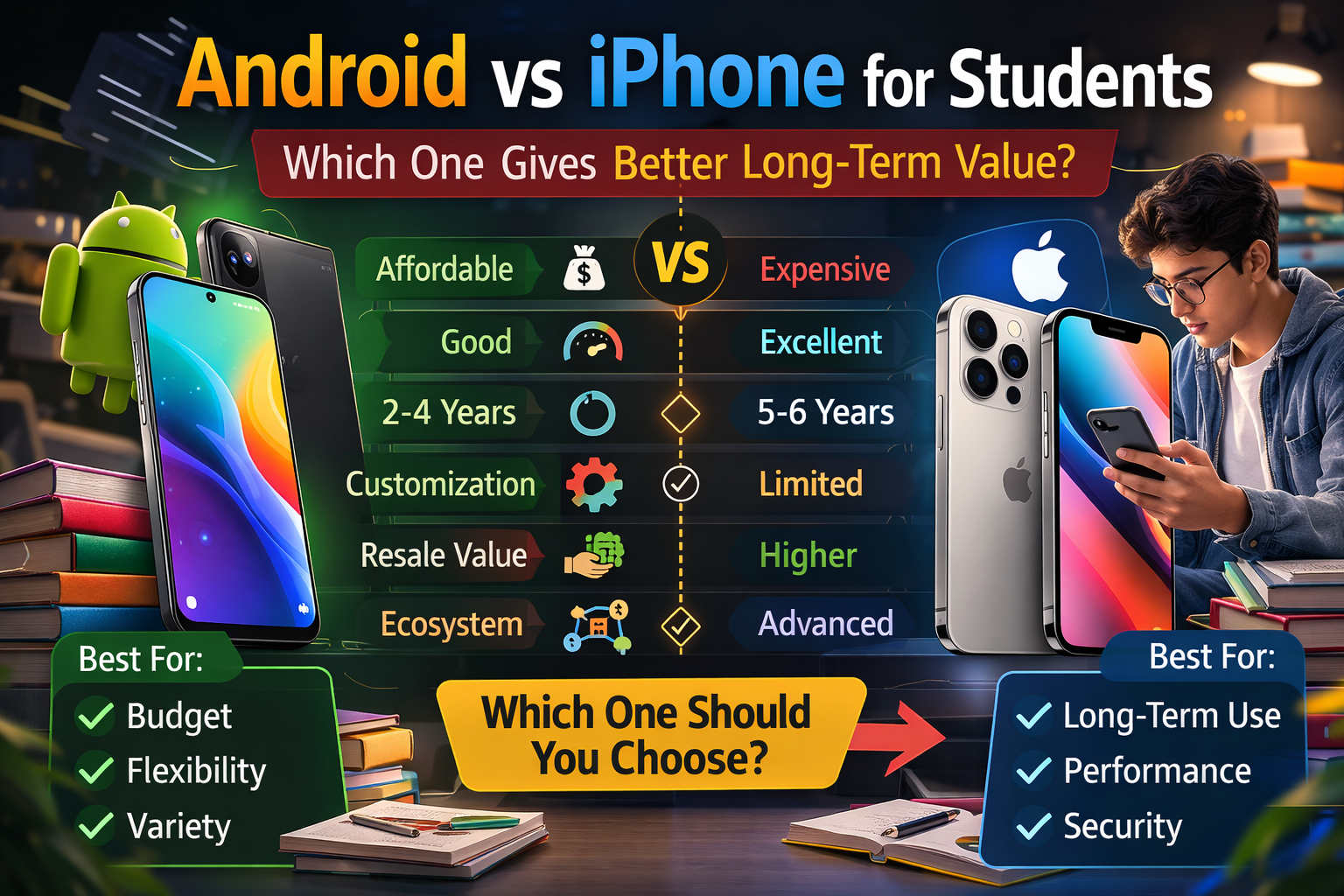
Choosing the right smartphone is one of the most important tech decisions for students. A smartphone is not just a device for calling or messaging anymore—it has become a learning tool, productivity assistant, entertainment hub, and communication platform. Students use smartphones for: online classes, research and note-taking, communication with teachers and classmates, content creation and social media, productivity apps and organization tools.
Two platforms dominate the smartphone market: Android and iPhone (iOS). Each offers unique advantages, but which one provides better long-term value for students? In this detailed guide, we will compare Android and iPhone based on price, performance, software updates, durability, resale value, and overall student usability.
Why Smartphones Matter for Students
Modern education increasingly relies on digital tools. Many schools and universities encourage students to use mobile apps for studying, collaboration, and productivity. A good smartphone helps students: access educational apps, stay organized, capture lecture notes, manage schedules, attend online classes, conduct quick research. Because students often have limited budgets, choosing a phone that offers long-term value and durability is extremely important.
Android Phones for Students
Android smartphones are produced by many brands including Samsung, Google Pixel, OnePlus, Xiaomi, and others. This diversity means Android offers a wide range of price options, making it appealing to students.
Advantages of Android for Students
- Affordable Price Range: Students can find Android smartphones in almost every price category: budget, mid-range, flagship. This flexibility allows students to choose a device that fits their budget.
- Customization and Flexibility: Change themes, install different launchers, customize widgets, use third-party apps more freely.
- More Hardware Options: Expandable storage, larger batteries, fast charging, foldable displays.
- Budget Friendly Repairs: Repairing Android phones is usually less expensive than repairing iPhones.
Disadvantages of Android Phones
- Software Updates: Many Android phones receive updates for only 2–4 years, though newer models from Samsung and Google offer longer support.
- Inconsistent Performance: Lower-priced Android devices may slow down after several years.
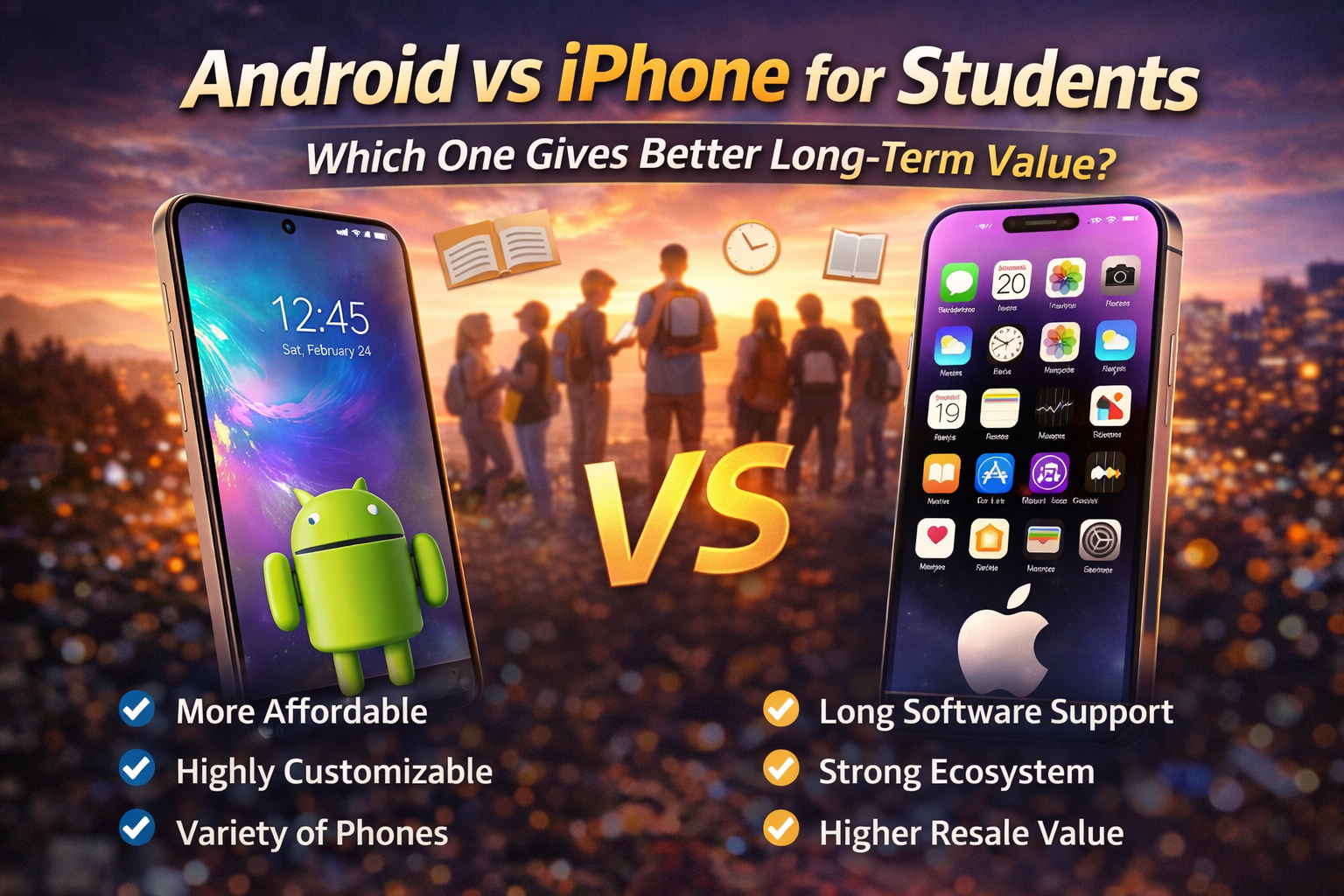
Long-term value: Android vs iPhone infographic
iPhone for Students
Apple’s iPhone is known for its premium design, long software support, and strong ecosystem. Although iPhones are more expensive, they often provide excellent long-term value.
Advantages of iPhone for Students
- Long Software Support: Apple provides software updates for 5–6 years, significantly longer than most Android devices.
- Smooth Performance: Even older iPhones tend to remain fast and responsive.
- Strong Ecosystem: AirDrop, iCloud sync, universal clipboard, Handoff – great for students with MacBooks or iPads.
- High Resale Value: iPhones retain value better, helping students recoup cost when upgrading.
Disadvantages of iPhones
- Higher Initial Price: iPhones are typically more expensive upfront.
- Limited Customization: Apple restricts certain UI changes and third‑party tools.
Android vs iPhone: Long-Term Value Comparison
| Feature | Android | iPhone |
|---|---|---|
| Price | More affordable | Expensive |
| Software Updates | 2–4 years | 5–6 years |
| Customization | Very flexible | Limited |
| Performance | Depends on brand | Very consistent |
| Resale Value | Lower | Higher |
| Ecosystem | Less integrated | Highly integrated |
Which One Is Better for Students?
The answer depends on the student’s needs and budget.
✅ Android is better if you want:
- A budget-friendly phone
- Customization & flexibility
- Hardware variety (expandable storage, big battery)
- Lower repair costs
✅ iPhone is better if you want:
- Long software support (5+ years)
- Stable, smooth performance
- Seamless ecosystem (Mac/iPad)
- Higher resale value
Best Smartphones for Students in 2026
Best Android Phones for Students
- Samsung Galaxy A series (A56, A36)
- Google Pixel 9a / Pixel 9
- OnePlus Nord 5
Best iPhones for Students
- iPhone 15 (or iPhone 16 base)
- iPhone 15 Plus
- iPhone SE (2026 edition)
These models balance price, performance, and longevity.
Tips for Students Choosing a Smartphone
- Battery Life: Essential for full day of classes.
- Storage: At least 128GB for apps, notes, media.
- Camera Quality: Helps scan documents and capture notes.
- Durability: Strong build reduces repair costs.
Future of Smartphones for Students
Smartphones will continue to become even more important in education. Future developments may include: AI learning assistants, improved note-taking tools, better productivity apps, advanced collaboration features. Both Android and iPhone platforms are evolving to support digital learning environments.
Frequently Asked Questions
Which phone is better for students, Android or iPhone?
Do iPhones last longer than Android phones?
Is Android cheaper than iPhone?
Which phone is best for college students?
Conclusion
Both Android and iPhone offer strong advantages for students. Android provides flexibility, affordability, and variety, making it ideal for students who want more options within a limited budget. On the other hand, iPhones offer long software support, reliable performance, and strong resale value, which can make them a smart long-term investment. Ultimately, the best smartphone for students depends on individual needs, budget, and preferred ecosystem.