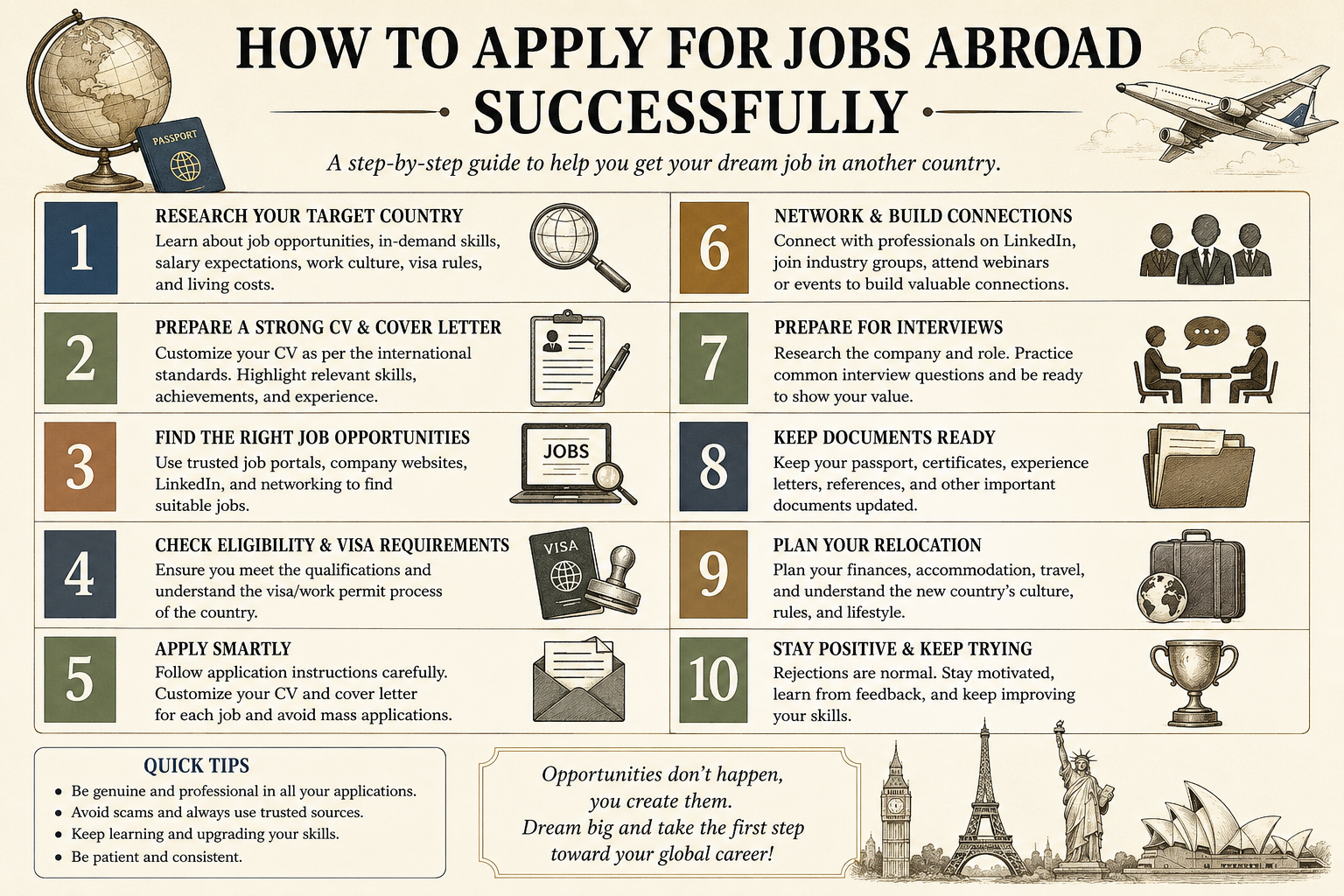
How to Apply for Jobs Abroad Successfully – Your 2026 Global Career Guide
Introduction: Your Global Career Starts Here
So you've decided to take the leap. You want to work abroad—maybe for the adventure, maybe for the career growth, or maybe because the opportunities in your home country just aren't cutting it. Whatever your reason, you're not alone. The global job market is more accessible than ever, but landing a role in another country comes with unique challenges.
Here's the thing: applying for jobs abroad is different from applying locally. You're not just competing with local candidates—you're competing with talent from around the world. Your resume needs to work across borders. Your cover letter needs to explain why you're worth the extra effort of sponsorship. And your interview skills need to cross cultural boundaries.
The good news? Thousands of professionals successfully make this transition every year. Priyanka Bhardwaj, who secured visa-sponsored roles in Laos, Vietnam, and Australia through LinkedIn, proves it's possible with the right strategy. This guide will walk you through everything you need to know.
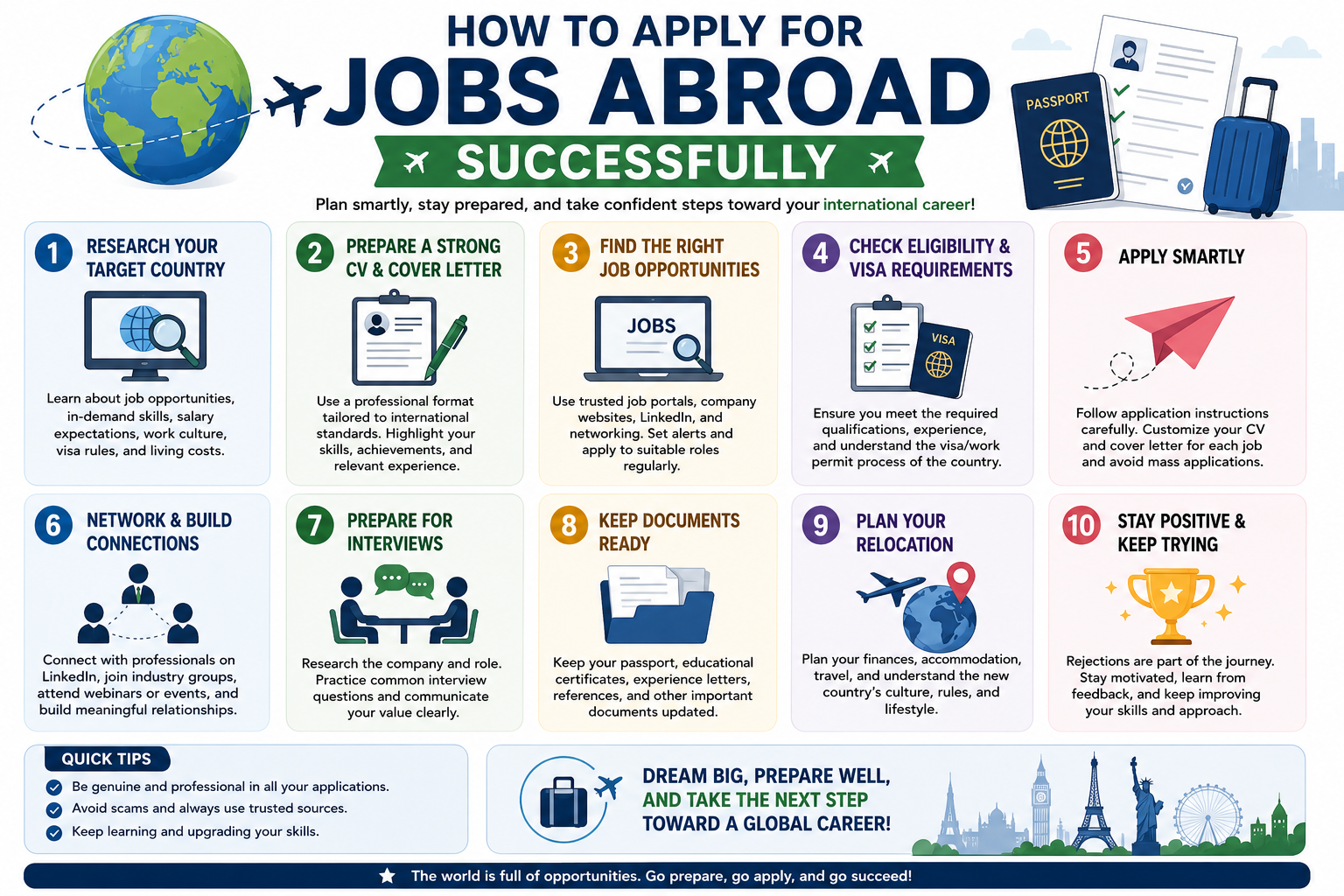
Chapter 1: Before You Apply – The Pre-Flight Checklist
Before you start firing off applications, you need a solid foundation. Think of this as your "pre-flight" checklist.
1. Choose Your Target Country: The mindset of "anywhere" will overwhelm you. Instead, be intentional. Pick one or two countries where:
- You have language fluency or citizenship
- Your industry is growing
- You understand the work culture and visa landscape
2. Research Work Visas: This is non-negotiable. Before you apply, understand:
- If your skills are in demand
- The visa types available
- The required paperwork
- Whether companies in that country are set up to sponsor visas
3. Understand Living Costs: Rent, groceries, transport, healthcare—these vary wildly between countries. Tools like Purchasing Power Parity converters and insights from locals can help you avoid nasty surprises.
4. Learn About Culture and Language: Even basic language skills help you adapt faster. Cultural awareness also matters in the workplace—direct vs. indirect communication styles, for instance, can make a huge difference in interviews.
5. Think About Your Timeline: For Europe, apply 3-6 months before your planned start date. For countries outside Europe, the period is 6-9 months in advance due to visa regulations.
Chapter 2: Your Resume – Make It Globally Friendly
Your resume is your first impression. If it's not formatted for international eyes, you might not even get past the robots.
The ATS Reality: Many international companies use Applicant Tracking Systems (ATS). ATS-friendly resume means:
- Simple PDF format (no graphics or fancy designs that confuse the system)
- Clear structure with standard headings
- Keywords from the job description woven in naturally
CV vs. Resume – Know the Difference: Resume expectations vary dramatically by country. Some markets prefer:
- A photo included (common in parts of Europe and Asia)
- Date of birth included
- A longer "CV" format rather than the U.S. style 1-2 page resume
- Different date formats
7 Tips for International CV Success:
- Tailor to the Country and Role: Every country and company has its own style. Research what works in your target market. Use terms they're familiar with.
- Focus on Achievements, Not Just Responsibilities: Instead of only listing what you did, show what you achieved. Numbers help recruiters around the world understand your impact.
- Keep It Clean and Easy to Read: Use clear headings, simple fonts, and bullet points. International employers usually prefer clarity over style.
- Make It International-Friendly: Use standard date formats: "Jan 2022 – Dec 2023." Include city and country for previous roles. Highlight languages you speak. Add certifications recognized internationally.
- Avoid Local Jargon: Terms or abbreviations common where you are might confuse someone abroad. Spell things out or use widely understood alternatives.
- Show Adaptability and Soft Skills: International employers care about how you work with others and handle new challenges. If you've collaborated with diverse teams or learned new skills quickly, include it.
- Add Country Code to Your Phone Number: International recruiters need to reach you. Add your country code to your phone number on your CV and LinkedIn.
Chapter 3: The Cover Letter – Your Commercial Proposal
Forget school essays. A cover letter for an international role is a commercial proposal where you are the product.
The Structure That Sells:
1. The Hook: Start with energy or enthusiasm. Avoid the boring "I am writing to apply for..."
2. Your Value (The Meat): Don't just repeat your resume. Use this formula: Company problem → Your solution → Result.
3. Culture Fit: Western and international companies hire people they enjoy working with. Show you share their values.
4. Call to Action: Suggest the next step. Don't wait for them to figure it out.
Phrases That Impress International HR:
| Weak | Strong |
|---|---|
| Was responsible for | Spearheaded (for leadership) |
| Made things better | Streamlined (for efficiency) |
| Worked with | Facilitated (for teamwork) |
| Helped | Revitalized (if you saved a project) |
Soft skills phrases that work:
- "I thrive in fast-paced environments..."
- "Eager to leverage my skills in..."
- "Proven track record of..."
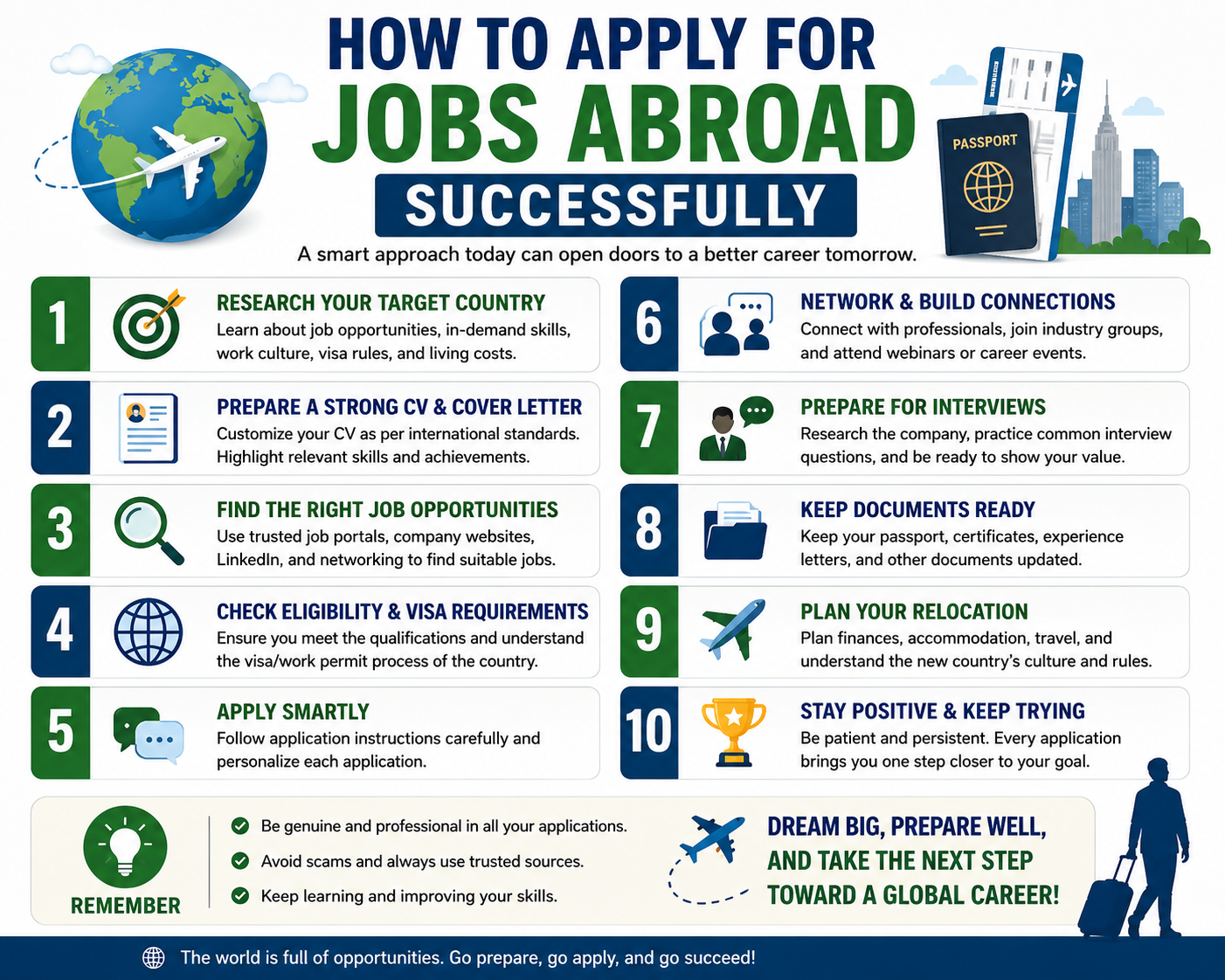
Chapter 4: The Application Process – Strategy Over Volume
Where to Look for Jobs:
| Category | Platforms |
|---|---|
| Global | LinkedIn Jobs, Indeed, Glassdoor |
| UK | Reed, TotalJobs, CWJobs, jobs.ac.uk, NHS Jobs, Civil Service Jobs |
| Canada | Job Bank Canada, Workopolis, TalentEgg |
| Australia | Seek, JobActive, GradConnection |
| UAE/Gulf | GulfTalent, Naukrigulf, Bayt |
The Strategy: Targeted, Not Spray-and-Pray: Applying to 50 jobs a day with a generic CV rarely works. One professional who did exactly that faced numerous rejections before switching to a targeted approach.
Instead, try this:
- Find international professionals on LinkedIn in your field
- Check their profiles to see where they work
- Identify companies that sponsor visas
- Create a list of these companies
- Apply to them
Prioritize Fresh Adverts: Don't apply to 3-month-old listings. Check when a job was posted and prioritize recent opportunities.
Chapter 5: LinkedIn – Your Global Resume
Your LinkedIn profile is your 24/7 resume. If it's not optimized, you're invisible to international recruiters.
Make Your Profile "All-Star": Recruiters will Google you. Make sure your profile is complete and professional:
- Professional photo (not a selfie or casual shot)
- "About" section that grabs attention from the first sentence
- Keywords like "Open to Relocation" and "Visa Sponsorship" in your profile
The Smart Search Technique: Instead of searching for jobs on LinkedIn, search for international professionals. See where they work. Build a list of target companies that actually sponsor visas.
Network Strategically: Search LinkedIn for:
- Alumni in your target country
- People in multinational firms with offices there
- Professionals who relocated internationally
Chapter 6: The Interview – Cross-Cultural Communication
Prepare for Screening Calls: The first interview is often a screening call with a recruiter. They're checking your suitability and your English level. Practice "Tell me about yourself" in 2 minutes, not 10.
Understand Direct vs. Indirect Communication: Different cultures have different communication styles. In some countries, direct feedback is expected; in others, it's considered rude. Research the style of your target country.
Practice Out Loud: Don't improvise in the chair. Practice your answers out loud—record yourself on a voice recorder. What sounds good in your head might not flow well when spoken.
Use the STAR Method: For behavioral questions, structure your answers using STAR: Situation, Task, Action, Result.
Learn Connecting Phrases: Phrases like "Furthermore," "Moreover," and "On the other hand" give you time to think while you speak.
Nail the Follow-Up: A personalized follow-up note after an interview leaves a great impression. Reference a specific project, value, or goal from the conversation. It shows engagement and enthusiasm.
Chapter 7: Decoding HR Responses
Understanding what recruiters really mean saves you from endless waiting.
| What They Say | What It Means | Your Action |
|---|---|---|
| Silence (2+ weeks) | Usually a 'No' | Send one polite follow-up, then move on |
| "We'll keep your CV on file." | "Not now, but you're suitable." | Polite rejection without burning bridges |
| "Another candidate matches our needs better." | Someone had more specific experience | Don't take it personally. Ask for feedback if possible |
| Invitation to screening | Congratulations! But the real interview is yet to come | Prepare thoroughly |
Chapter 8: The Visa Sponsorship Question
This is often the elephant in the room. Here's how to handle it.
How to Identify Sponsor-Friendly Companies:
- Check if the company is on the official sponsor list (for the UK)
- Search for "international professionals" on LinkedIn and see where they work
- Target multinational companies with global rotational programs
How to Pitch Yourself for Sponsorship: Employers need to justify the extra effort of sponsoring you. Think about your ROI to them. Analyze your past wins and achievements to show why you'll be worth it.
What NOT to Say: Avoid sounding like you're coming back because you couldn't stay where you were. Instead: "I wanted global exposure, and now I'm excited to apply that training in [target market]."
Chapter 9: Stay Resilient – The Emotional Side
Job hunting abroad is tough. Add visa stress and the weight of family expectations, and it can feel overwhelming.
- Remember: You're Not Alone: Many professionals face rejection cycles before landing the right role. It's incredibly common, especially with visa constraints.
- Create Structure: Don't let the process consume you: Set days for applications, set days for outreach and networking, protect time to rest without guilt.
- Don't Take Rejection Personally: Even experienced professionals face rejection. It's part of the process. You can't control who else applies or what companies need right now. You can only control the quality of your applications and your persistence.
- Celebrate Small Wins: Each application is practice. Each connection made is a step forward. Consistency will carry you further than trying to do everything at once.
Chapter 10: Your 30-Day Action Plan
Want to test the waters? Here's a plan:
Target Selection: Identify two countries. Research top 20 employers in each.
Research & Network: Reach out to five alumni per country. Ask about hiring norms and visa considerations.
Resume & Listings: Adjust resume to local standards. Identify five open roles per country.
Apply & Connect: Submit 5-10 targeted applications. Continue alumni conversations.
FAQ – Your Burning Questions Answered
Conclusion: Your Borderless Career Awaits
A global career isn't defined by a border. It's defined by the value you create, the problems you solve, and the leadership you demonstrate. If the path in your home country feels slow, widening your aperture might not be retreat—it might be your most strategic move.
Remember:
- Choose your target country intentionally
- Research visa requirements and living costs
- Localize your resume for each market
- Write cover letters that show your value
- Network strategically—it's your highest-return activity
- Prepare for cross-cultural interviews
- Stay resilient through rejections
- Be patient—finding a job abroad requires consistent effort
Your experience is valuable. Your expertise is needed by the world. The only thing standing between you and the offer is the right strategy and the persistence to follow through. 🚀