Personal Finance for Beginners in 2026: A Complete Step-by-Step Guide to Building Wealth
💰 Master your money: budget, save, invest, and build long-term wealth — even on a modest income.
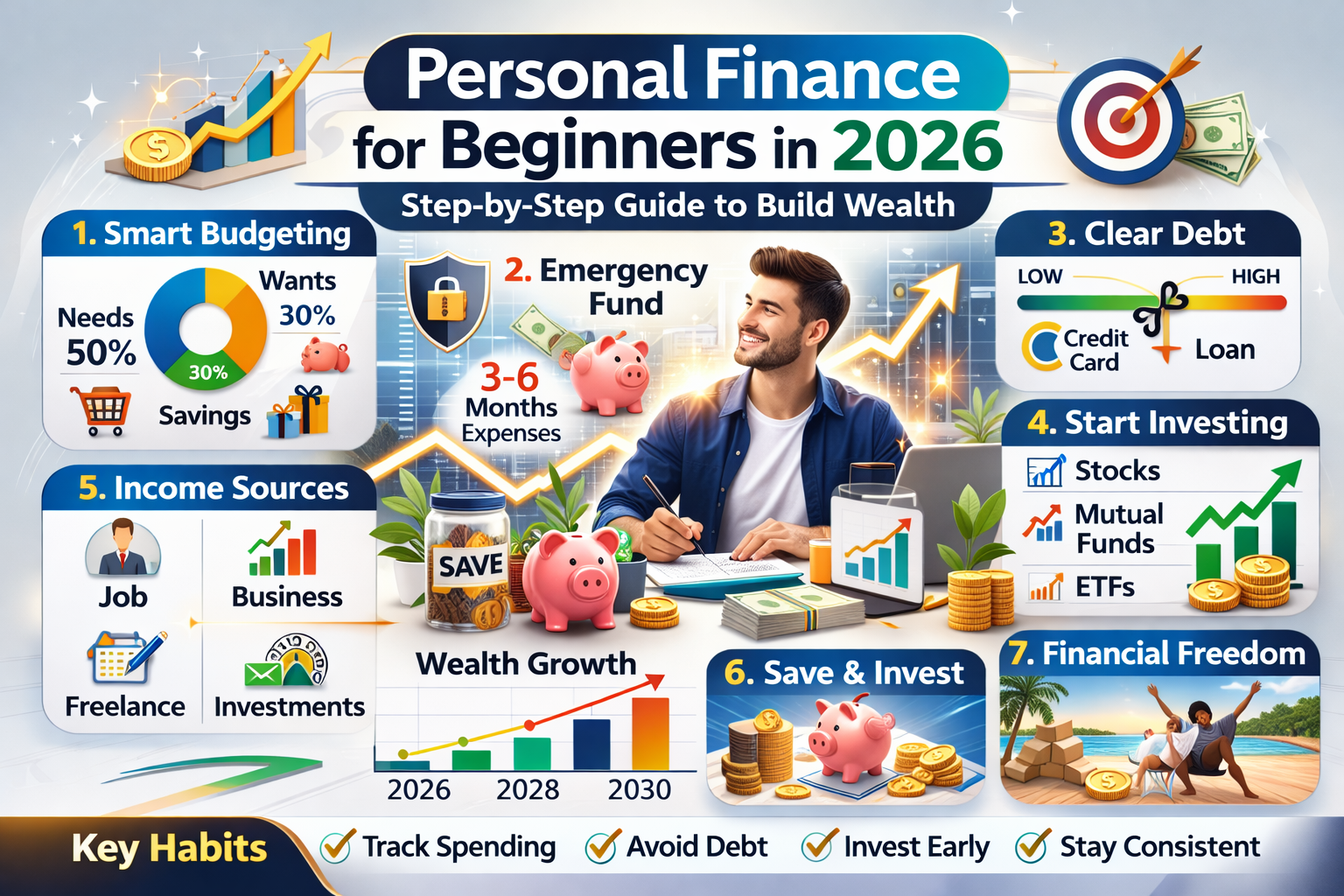
In 2026, financial literacy is more important than ever. Rising living costs, digital spending habits, and economic uncertainty make it essential to manage money wisely. Many people work hard but struggle financially because they lack basic money management skills. Personal finance is not about earning more — it is about managing what you earn effectively.
Why Personal Finance Matters in 2026
The financial world has changed dramatically: digital payments dominate, online subscriptions increase spending, inflation impacts savings, and investment opportunities are more accessible. Without financial planning, it is easy to lose control of expenses.
Step 1: Understand Your Income and Expenses
Before building wealth, you must understand where your money goes. Track salary or business income, monthly bills, food expenses, transport, subscriptions, and entertainment. Use budgeting apps or spreadsheets to track spending.
Step 2: Create a Smart Budget (50/30/20 Rule)
One of the most effective budgeting strategies: 50% Needs (rent, food, bills), 30% Wants (shopping, entertainment), 20% Savings & Investments. Adjust percentages based on your situation.
Step 3: Build an Emergency Fund
An emergency fund protects you from medical emergencies, job loss, and unexpected repairs. Target: 3–6 months of living expenses. Keep this money in a separate savings account.
Step 4: Eliminate High-Interest Debt
Debt slows financial growth. Focus on paying off credit cards, personal loans, and high-interest installments. Use either the Snowball Method (smallest debt first) or Avalanche Method (highest interest first).
Step 5: Start Investing Early
Investing helps your money grow through compound interest. Beginner-Friendly Options: Index funds, mutual funds, retirement accounts, ETFs. Start small and increase gradually.
Step 6: Diversify Income Sources
Relying on one income source is risky. Consider freelancing, side business, dividend investments, rental income, or digital products. Multiple income streams provide security.
Step 7: Improve Financial Knowledge
Read books and learn about investing, tax planning, wealth management, and passive income. Financial education increases long-term stability.
Common Money Mistakes to Avoid
❌ Living beyond your income ❌ Ignoring savings ❌ Investing without research ❌ Emotional spending ❌ Not tracking expenses.
How to Build Wealth Over 10 Years
Year 1–2: Build emergency fund and clear debt.
Year 3–5: Invest consistently and increase income.
Year 6–10: Focus on asset growth and passive income.
Consistency is more powerful than large one-time investments.
Financial Habits of Wealthy People
✔ They track expenses ✔ They invest regularly ✔ They avoid unnecessary debt ✔ They focus on long-term growth ✔ They value financial education.
✅ Benefits of Strong Personal Finance
Reduced stress, financial independence, retirement security, freedom to pursue goals, stability during crises.
📚 Start Your Financial Journey
Explore resources: Money management skills | Finance courses | Career tips
Future of Personal Finance
By 2030: Digital finance tools will dominate, AI will assist in budgeting, cryptocurrency adoption may increase, online investing will become easier, and financial literacy will remain essential.
Frequently Asked Questions
* Always review Privacy Policy and Disclaimer before applying.