
How to Find Legitimate Remote Jobs Online – Your 2026 Action Plan
Introduction: Remote Work Isn't Dead – It's Just More Competitive
Remote work isn't dead. It's just gotten more competitive. In 2026, around 16% of full-time US employees are fully remote – down from the pandemic peak but still dramatically higher than the 5% pre-pandemic level. The problem is that fully remote postings now make up only about 21% of all job listings but pull roughly 50% of all applications.
That means you need a sharper strategy than just scrolling LinkedIn and hitting "Apply."
The good news? Legitimate, well-paying remote jobs absolutely exist. Thousands of people land them every week. The difference between those who succeed and those who keep spinning their wheels usually comes down to where they look and how they approach the process.

Chapter 1: Where the Real Remote Jobs Are (And Where to Find Them)
Not all job boards are created equal. The big general platforms like LinkedIn and Indeed are flooded with listings, but they're also flooded with scams and "remote" roles that actually require you to live in a specific city.
The Best Remote-Focused Job Boards:
Tech, marketing, design
✅ Free
Vetted, scam-free listings
💰 Paid (worth it)
Fully remote companies
✅ Free
Curated tech jobs
✅ Free
Aggregated with salaries
✅ Free
Startup roles
✅ Free
The LinkedIn Strategy (That Actually Works): LinkedIn is still valuable, but you need to use it with discipline. Here's what works:
- Use the "Remote" location filter and combine it with date-posted filters to find fresh listings (within the last 3 days)
- Verify each listing manually – many employers tag hybrid roles as remote
- The bigger value of LinkedIn is networking: follow hiring managers at target companies, engage with their posts, and build familiarity before you apply
Chapter 2: Which Industries Are Still Hiring Remote?
Remote work is not spread evenly across industries. Focus your energy where the opportunities actually are:
Largest single category; demand continues to outpace supply
Digital work with measurable deliverables; collaboration tools are mature
Many companies have permanently shifted to distributed models
Portfolio-based hiring; Figma and async feedback work well
Independent, project-based work that translates well to remote
Widely available; territory-based roles are more nuanced
Chapter 3: How to Spot Remote Job Scams (Before You Waste Your Time)
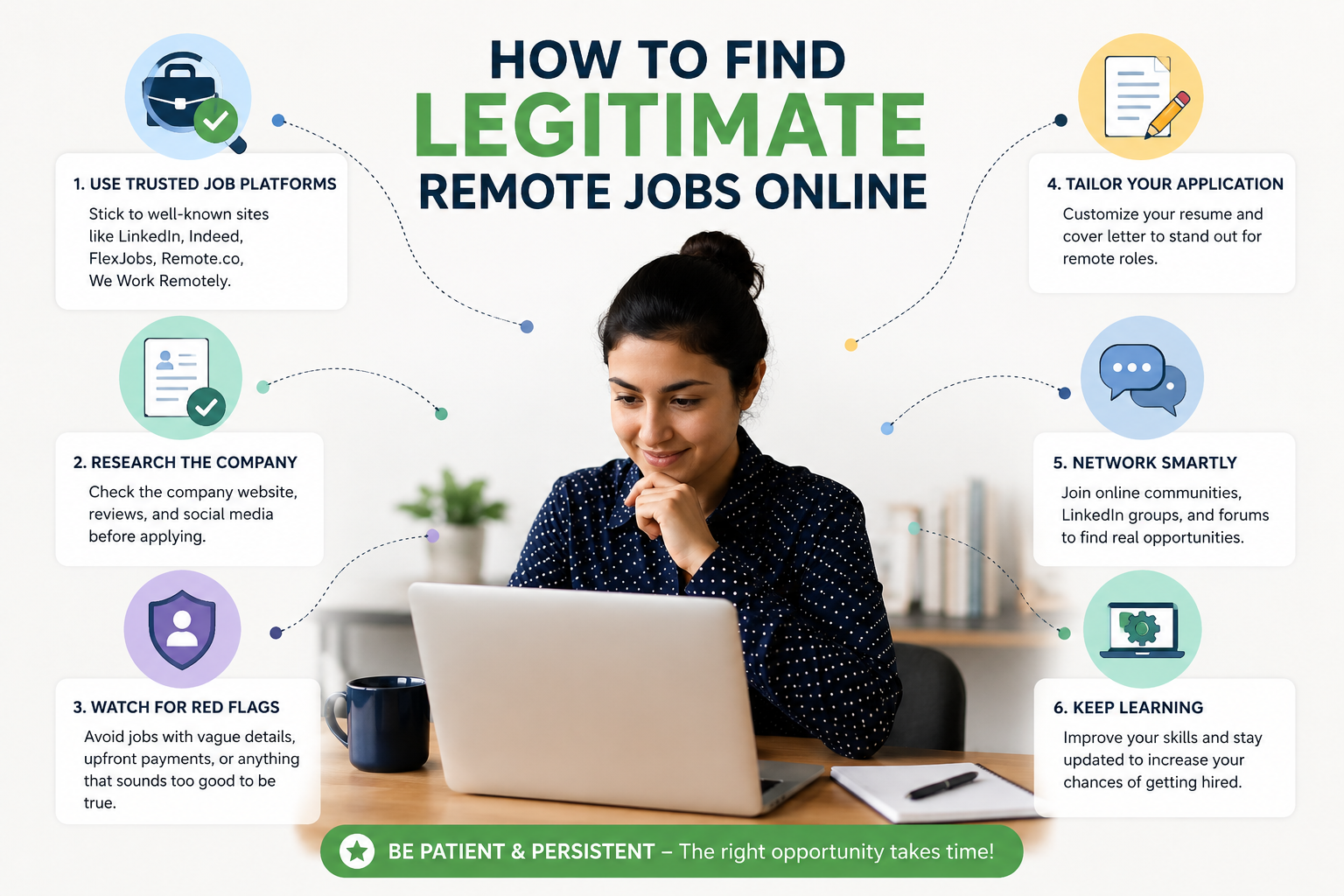
As demand for remote work has grown, scams have become increasingly sophisticated. Here's how to protect yourself:
Red Flags That Should Stop You Immediately:
- They ask for money upfront – Legitimate employers never charge you for equipment, training, or background checks. No exceptions.
- The salary is unrealistically high – A data entry role paying $85/hour? A customer service position offering $120K with no experience required? That's a scam.
- The interview happens only over chat – Real companies conduct video or phone interviews. If the entire process takes place over Telegram, WhatsApp, or text messages, walk away.
- They offer you the job immediately – Getting hired after a single chat conversation with no technical assessment is not a sign you're impressive. It's a sign the job doesn't exist.
- The company has no online presence – Search the company name. Check LinkedIn for employees. Look for their website, social media, and reviews on Glassdoor. If you can't find any legitimate trace, walk away.
Subtler Warning Signs:
| Warning Sign | What It Looks Like |
|---|---|
| Vague job descriptions | "Help with various tasks" or "support the team with projects" |
| Personal email addresses | Recruiter writing from Gmail or Yahoo, not a corporate domain |
| Pressure to act quickly | "This offer expires in 24 hours" – pressure tactics, not professional hiring |
| Requests for personal info early | SSN, bank details, or ID copies before you've received and accepted an offer |
| Poorly written descriptions | Typos, grammatical errors, and unclear responsibilities |
Chapter 4: Your Application Strategy – Quality + Speed
The people who consistently land remote offers are not always the most qualified. They search systematically, apply strategically, and understand how remote hiring actually works.
The 72-Hour Rule: You are more likely to be interviewed if you get your application in within the first 72 hours of a role being posted. Turn on job alerts so you get instant notifications. When a job appears, apply fast.
One Resume Per Job Title: Instead of customizing every single resume from scratch (which burns you out), use one resume per job title. For example:
- "Social Media Manager" → one resume
- "Content Marketing Manager" → one resume
- "Software Engineer" → one resume
If you want to get fancy, you can also create versions for specific industries (e.g., "SaaS Marketing Manager" vs "E-commerce Marketing Manager"). This gives you the speed you need without sacrificing quality.
Actually Fill Out the Questions: When an application asks you questions, take those 5-10 minutes to actually fill them out. You do not want to end up in the pile with the 200 other people who didn't do it.
Highlight Remote-Specific Skills: In your application materials, highlight your proficiency with remote tools like Slack, Zoom, Notion, Asana, or Linear. Mention any experience with asynchronous work, self-management, and clear written communication.
Chapter 5: Networking for Remote Roles
Networking isn't just for "nepo babies." It's a completely free strategy that works.
Who's in Your Network? Think beyond family and friends:
- Past colleagues and managers
- Alumni from your school
- People you've met at conferences or webinars
- Connections in industry-specific Slack groups or Discord servers
How to Reach Out: Don't ask for a job. Instead:
- Ask for an informational interview (15-20 minutes) to learn about their experience
- Engage with their LinkedIn posts – comment with genuine insights
- Share relevant articles or opportunities with them (even if you don't benefit directly)
Chapter 6: How to Stand Out – The Project-Based Approach
In a world where hundreds of people apply to every remote role, showing is better than telling.
One professional increased her salary from ₹10 lakh to ₹80 lakh by using this approach:
- Find the right company – Research companies you want to work for. Read their job requirements, even if they're not hiring right now.
- Use AI to brainstorm a project – Take the job description and use AI to generate a project concept that solves a real problem for that company.
- Build a prototype – Even with little coding experience, use AI development platforms to create a working prototype. Iterate until it's impressive.
- Reach out directly – Instead of submitting through an application portal, message the hiring manager on LinkedIn. Share what you built and explain why it matters.
- Share your work publicly – Create a video demonstration and post it on LinkedIn. Pin it to your profile.
Chapter 7: The 30-Day Action Plan
If you're serious about finding a legitimate remote job, here's a structured plan:
Setup
Create accounts on 2-3 remote-focused job boards. Turn on job alerts. Update LinkedIn profile to "Open to Remote."
Target
Build a list of 20-30 remote-first companies. Read their career pages and culture handbooks.
Application
Apply to 5-10 roles per week. Focus on quality + speed. Fill out all application questions.
Network
Reach out to 5 people in your target industry. Ask for informational interviews. Engage on LinkedIn.
FAQ – Your Burning Questions Answered
Conclusion: Your Remote Career Starts Now
Finding a legitimate remote job in 2026 isn't easy. But it's absolutely possible. The people who succeed are the ones who search systematically, apply strategically, and know how to spot scams.
Your next steps:
- Start with the right job boards – not just LinkedIn and Indeed
- Build a target list of remote-first companies
- Turn on job alerts and apply fast (within 72 hours)
- Fill out application questions – don't skip them
- Network strategically – even if it feels awkward
- Trust your gut – if it feels like a scam, it probably is
The world is full of opportunities. Go find yours. 🚀