Remote Work Skills That Improve Your Employability – The 2026 Guide
Introduction: The Remote Work Revolution Is Here to Stay
Remember when working from home felt like a temporary experiment? Those days are long gone. Remote work has officially become a permanent fixture in the global job market. But here's the catch – the rules have changed. And if you're not keeping up, you're falling behind.
In 2026, basic digital literacy no longer cuts it. Competition for remote jobs is surging, hiring standards are tightening, and employers are looking for a completely new set of skills. The global talent pool means you're not just competing with people in your city anymore – you're competing with highly skilled professionals across dozens of countries.
But don't panic. This guide will walk you through exactly what skills you need to develop, how to build them, and why they matter more than ever before. Whether you're a fresh graduate, a seasoned professional looking to transition, or someone who simply wants more flexibility, mastering these skills will make you unstoppable.
Chapter 1: Why Remote Skills Matter More Than Ever
The numbers don't lie. Fully remote job availability grew by 3% in late 2025, but fully flexible options dropped from 39% to 28% between 2023 and 2024. What does this mean? Companies are becoming more selective. They're not just filling positions – they're carefully choosing candidates with proven advanced abilities.
As one career expert put it: "Expectations are evolving much faster than workers realize. Companies want people who can operate at a far higher level of independence, adaptability, and digital maturity."
The World Economic Forum has even ranked emotional intelligence among the top skills in the global market. This isn't just about knowing how to use Zoom anymore. It's about mastering a whole new way of working.
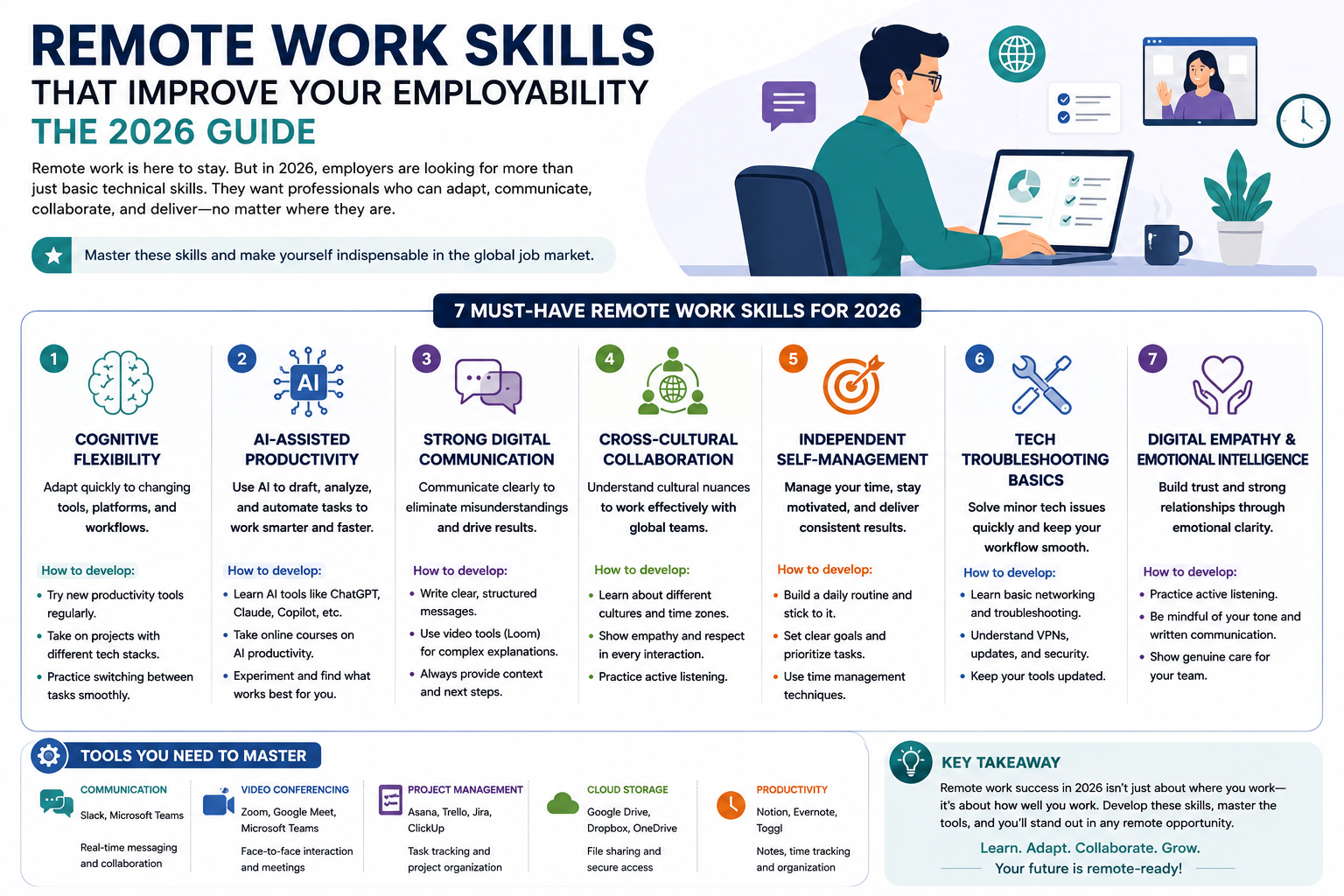
Chapter 2: The 7 Must-Have Remote Skills for 2026
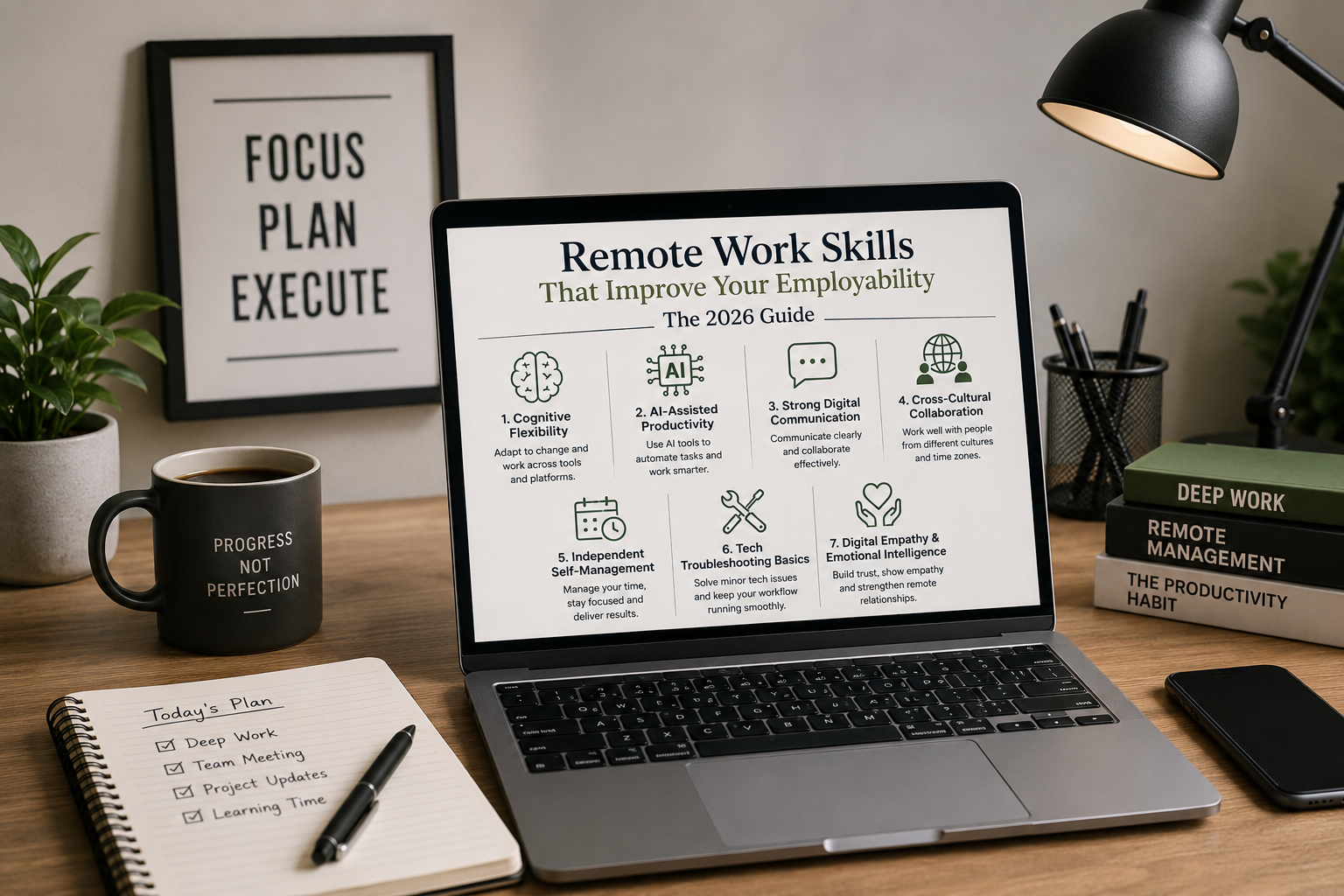
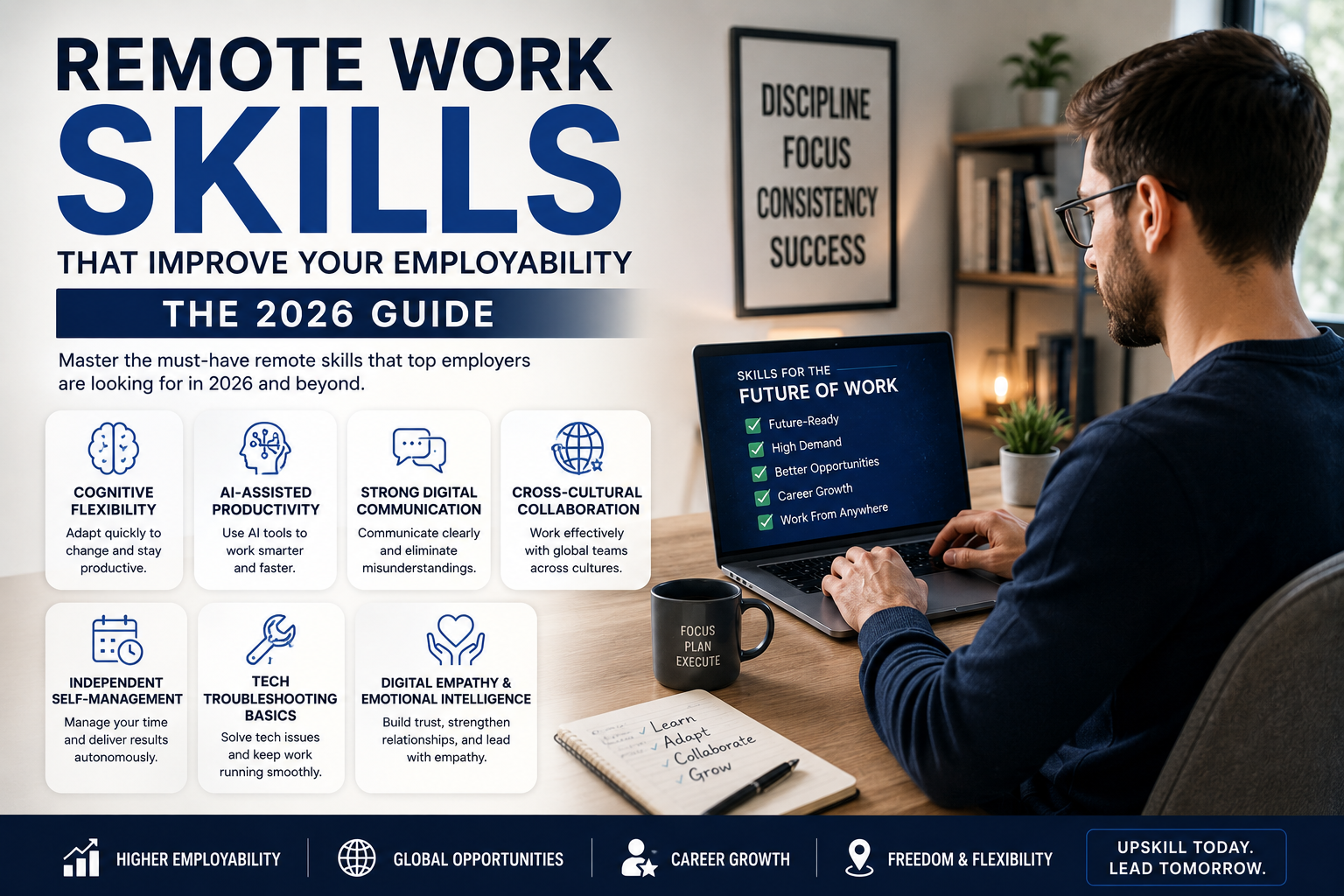
Based on current hiring trends and expert analysis, here are the seven essential remote work skills that will set you apart:
🧠 1. Cognitive Flexibility
The ability to switch gears smoothly between changing AI tools, platforms, and workflows without losing momentum.
How to develop: Try new productivity tools regularly. Volunteer for projects that use different tech stacks. Practice switching between tasks without losing focus.
🤖 2. AI-Assisted Productivity
Using AI to draft, analyze, and automate tasks to work at double the speed.
How to develop: Learn AI tools like ChatGPT, Claude, or Copilot. Take online courses on AI productivity. Experiment with different AI tools.
💬 3. Strong Digital Communication
Mastering clarity to eliminate "hidden" performance issues caused by unclear messaging.
How to develop: Practice writing clear, structured emails. Use video messages (like Loom) for complex explanations. Always provide context and next steps.
🌍 4. Cross-Cultural Collaboration
Understanding cultural nuances to reduce friction when working across multiple continents.
How to develop: Learn about different cultural communication styles. Be mindful of time zones. Practice active listening and empathy.
⏳ 5. Independent Self-Management
Structuring your own day and delivering consistent outcomes without the need for micromanagement.
How to develop: Create a daily routine. Use techniques like Pomodoro. Set clear goals and track your progress.
🔧 6. Tech Troubleshooting Basics
Solving minor technical issues quickly to maintain smooth workflows without waiting for IT.
How to develop: Learn basic networking and troubleshooting skills. Understand VPNs and password managers. Keep software updated.
❤️ 7. Digital Empathy and Emotional Intelligence
Building trust and managing professional relationships through emotional clarity.
How to develop: Practice active listening in virtual meetings. Be mindful of tone in written communication. Show genuine interest in colleagues' well-being.
Chapter 3: Tools You Need to Master
If remote work skills are the engine, tools are the vehicle. Here's what you need to master:
Chapter 4: Soft Skills That Make You Stand Out
Technical skills get you in the door. Soft skills get you promoted. Here are the soft skills that matter most in remote work:
- Self-Motivation: Set daily goals, create a dedicated workspace, find accountability partners.
- Time Management: Use calendar blocking, prioritize with Eisenhower Matrix, take regular breaks.
- Emotional Intelligence: Practice active listening, be transparent about workload, show empathy.
- Adaptability: Embrace change, stay curious, seek feedback and act on it.
Chapter 5: How to Build Your Skills (Even Without a Remote Job)
Don't have a remote job yet? No problem. Here's how to start building these skills today:
- Take Online Courses: Platforms like Coursera, Udemy, and LinkedIn Learning offer thousands of courses on remote work skills.
- Practice with Side Projects: Start a blog, build a website, or contribute to open-source projects on GitHub.
- Volunteer for Remote Teams: Many non-profits and open-source communities need help.
- Join Online Communities: Engage with professionals on LinkedIn, GitHub, and Stack Overflow.
- Build a Personal Brand: Share insights through blogs, LinkedIn posts, or short videos.
Chapter 6: The Hybrid Work Model – A Blended Reality
Not all remote work is fully remote. Hybrid models – where you split time between home and office – are becoming increasingly common. Here's how to succeed:
On In-Office Days (3 days): Maximize collaboration, build relationships, be visible.
On Remote Days (2 days): Focus on deep work, protect your time, stay connected.
Make the Hybrid System Work: Turn on video, speak clearly, be proactive: "Just checking if everyone online can see the screen."
Chapter 7: The Data – What Employers Are Actually Looking For
| Skill Category | Why Employers Value It | Demand Trend |
|---|---|---|
| Digital Communication | Prevents miscommunication and hidden performance issues | ⬆️ High |
| AI-Assisted Productivity | Doubles work speed and efficiency | ⬆️ High |
| Self-Management | Reduces need for micromanagement | ⬆️ Very High |
| Cross-Cultural Collaboration | Essential for global teams | ⬆️ Increasing |
| Emotional Intelligence | Builds trust and team cohesion | ⬆️ Top Tier |
Chapter 8: The Warning Signs – Are You Falling Behind?
Remote workers often decline gradually, not suddenly. Watch out for these warning signs:
- Slower adaptation to new tools.
- More miscommunication with colleagues.
- Silence when new systems are introduced.
- Getting stuck in outdated routines.
How to prevent this: Attend AI training courses. Offer feedback on AI tools. Continuously update your skills through courses and certifications. Stay curious and open to learning.
Chapter 9: Practical Steps to Get Started Today
Ready to level up? Here's a 30-day action plan:
Chapter 10: FAQ – Your Burning Questions Answered
Conclusion: The Future Belongs to You
The remote work landscape in 2026 is more competitive than ever. But here's the truth: the future belongs to those who prepare for it.
If you build these skills now – cognitive flexibility, AI-assisted productivity, strong digital communication, cross-cultural collaboration, self-management, tech troubleshooting, and digital empathy – you won't just keep up. You'll lead.
The global remote market is evolving fast. Don't get left behind. Start today. Practice. Learn. Adapt. And watch your employability soar.
Your future remote career starts now. Go get it. 🚀