The Rise of Electric Vehicles in 2026: How EVs Are Changing the Future of Transportation
⚡ Explore the latest EV trends, battery innovations, charging infrastructure, and the shift to sustainable mobility.
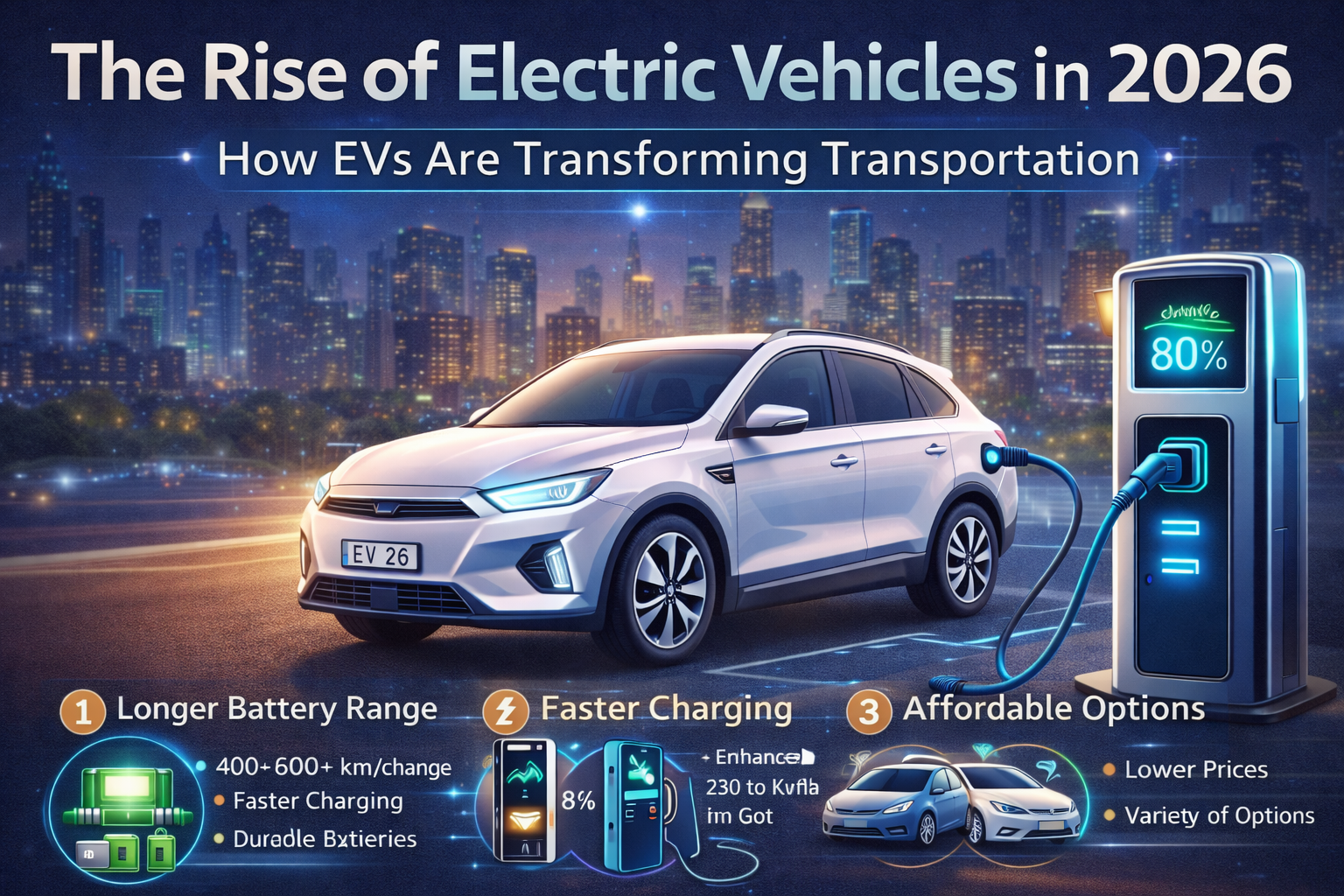
The transportation industry is undergoing one of the biggest transformations in modern history. In 2026, electric vehicles (EVs) are no longer experimental alternatives — they are becoming mainstream choices for consumers worldwide. Governments, manufacturers, and consumers are shifting toward electric mobility due to environmental concerns, rising fuel prices, and technological advancements.
Why Electric Vehicles Are Growing Rapidly
Several global factors are accelerating EV adoption: rising fuel costs, climate change awareness, government incentives, advances in battery technology, and expansion of charging networks. Consumers now see EVs as practical and cost-effective.
Key Electric Vehicle Trends in 2026
1. Longer Battery Range
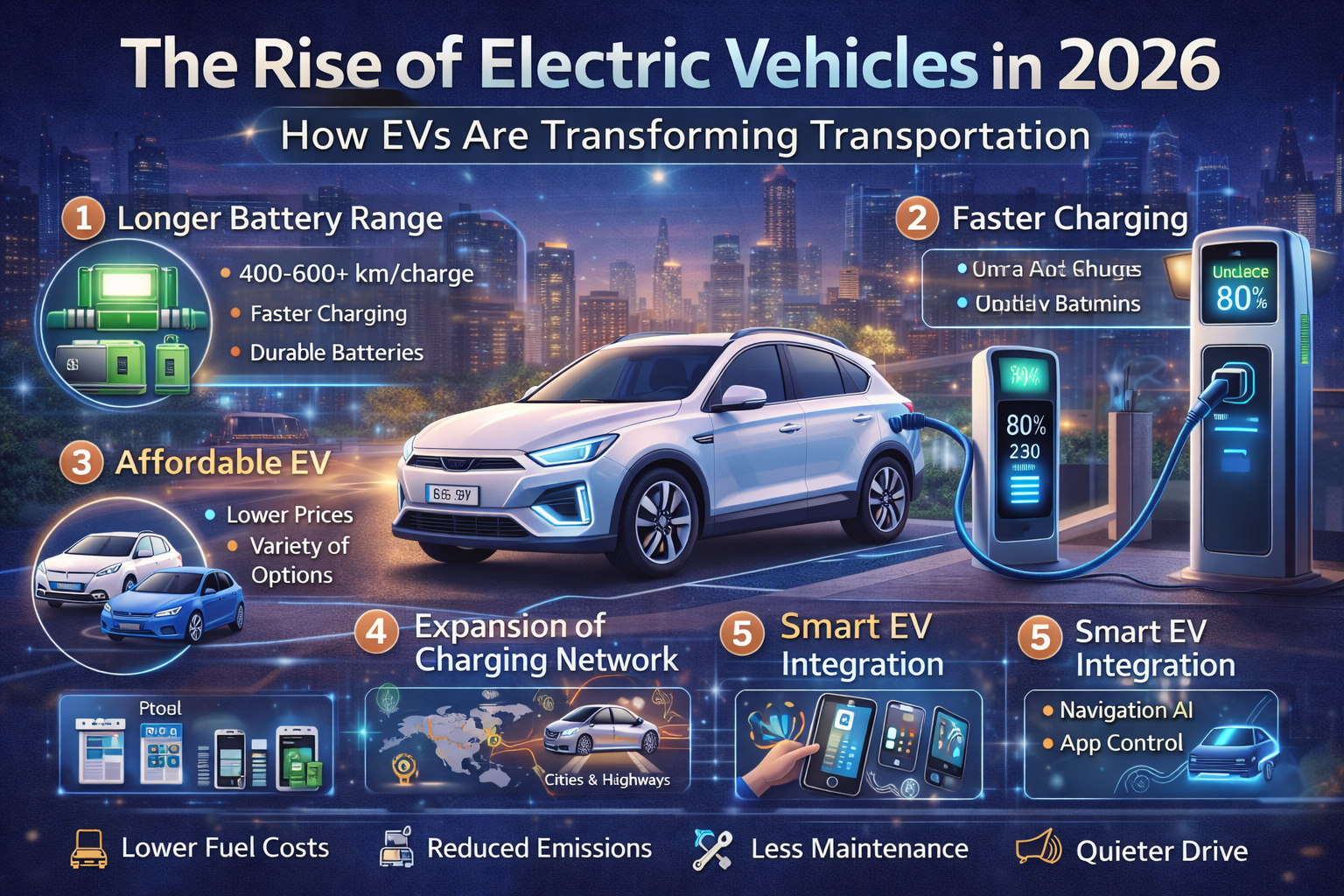
Modern EVs now offer 400–600 km per charge, faster charging times, and improved battery durability. Range anxiety is decreasing significantly.
2. Faster Charging Technology
Ultra-fast chargers can now charge 80% battery in 20–30 minutes. Public charging stations are expanding globally.
3. Affordable EV Models
More affordable options are entering the market. Mass production has reduced manufacturing costs.
4. Smart EV Integration
EVs now include AI-powered navigation, battery performance monitoring, smartphone app control, and remote diagnostics. Vehicles are becoming connected devices.
5. Expansion of Charging Infrastructure
Cities are investing heavily in public charging stations, highway fast chargers, and residential charging solutions. Charging accessibility is improving every year.
Environmental Impact of Electric Vehicles
EVs contribute to lower carbon emissions, reduced air pollution, and decreased dependence on fossil fuels. Although battery production has environmental impact, long-term benefits are significant.
Cost Comparison: EV vs Fuel Vehicles
| Factor | Electric Vehicle | Petrol/Diesel Vehicle |
|---|---|---|
| Fuel Cost | Lower | Higher |
| Maintenance | Lower | Higher |
| Engine Complexity | Simple | Complex |
| Emissions | Very Low | High |
EVs generally have lower long-term operating costs.
Challenges Facing Electric Vehicles
Despite rapid growth, challenges remain: battery recycling concerns, charging station gaps in rural areas, high upfront purchase cost, and grid capacity requirements. Governments and companies are actively addressing these issues.
EV Technology Innovations
Recent innovations include solid-state batteries, wireless charging, vehicle-to-grid systems, and autonomous driving integration. These advancements will shape the next decade.
Government Policies Supporting EV Growth
Many countries are offering tax incentives, banning future petrol car sales, subsidizing EV purchases, and investing in green infrastructure. Policy support is driving faster adoption.
The Future of Electric Mobility (2030 Outlook)
By 2030: EVs may dominate new vehicle sales, autonomous electric taxis may expand, charging time may drop below 15 minutes, and battery technology will become more sustainable. Transportation is becoming cleaner and smarter.
Should You Buy an Electric Vehicle in 2026?
Consider daily driving distance, charging access, budget, and government incentives. For many drivers, EVs are now practical and economical.
✅ Quick Recap: EV Benefits
- Lower running costs
- Reduced emissions
- Advanced smart features
- Quiet and smooth driving
- Government incentives
Explore green tech skills: Skills | Courses | Career tips
Frequently Asked Questions
* Always review Privacy Policy and Disclaimer before applying.