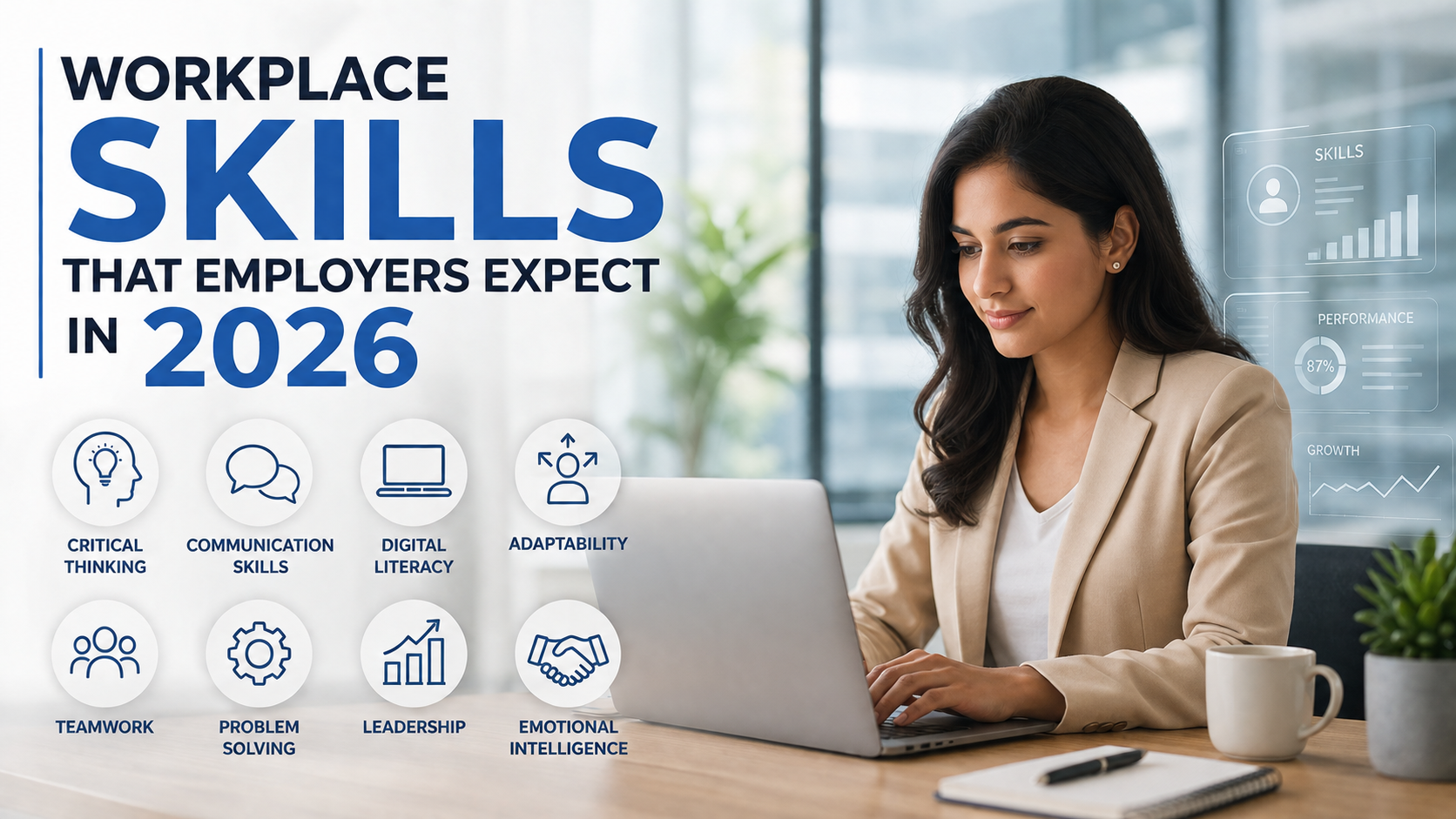
Workplace Skills That Employers Expect in 2026 – Your 2026 Guide
Introduction: The Rules Have Changed
The rules of the game have changed. In 2026, entry-level jobs in AI-exposed fields are seven times more likely to demand skills once reserved for senior professionals—like leadership, judgment, and stakeholder management. Meanwhile, according to the World Economic Forum, 39% of workers' core skills will change by 2030. As one PwC report put it: "The good news is that junior workers will be spared years of drudgery on basic tasks. The tough news is they need to quickly step up and demonstrate skills like leadership and strategic thinking."
This guide breaks down exactly what employers expect—the hybrid skill set that blends technical fluency with distinctly human capabilities.
Chapter 1: The "Seniorization" of Entry-Level Roles
A major shift is reshaping hiring. According to PwC's 2026 AI Jobs Barometer, which analyzed over a billion job advertisements globally, AI-exposed entry-level jobs that had been "seniorized"—meaning they added more than 10 traditionally senior skills—grew 35% between 2019 and 2025. Comparable roles that had not been seniorized fell by 10%.
What "Traditionally Senior" Skills Mean in 2026: PwC defined a skill as "traditionally senior" if it appeared more than 50 times in experienced, high-AI-exposure job postings in 2019, but fewer than five times in entry-level postings. Today, these skills are now expected of junior workers:
- Motivational leadership
- Team building
- People and stakeholder management
- Process management
- Mentorship
- Data-driven decision-making
Chapter 2: The "Power Skills" – Human Capabilities That AI Cannot Replace
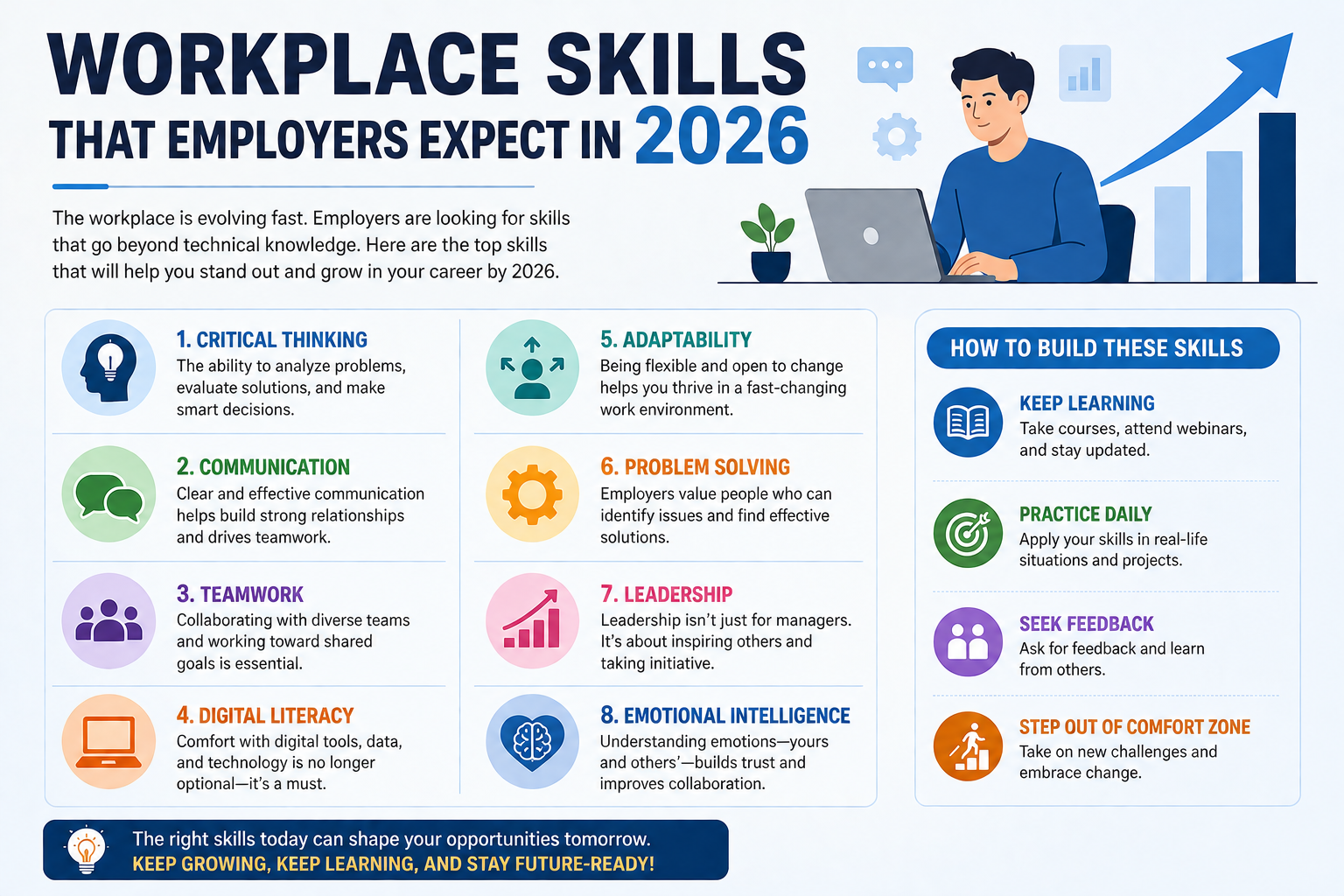
Even as AI advances, employers are doubling down on human-centered strengths. These skills remain the hardest to automate and are what make teams function effectively.
As AI automates tasks, clarity in explaining ideas and aligning teams becomes critical. Presentation and verbal communication skills are increasingly prioritized.
With routine tasks automated, human work is more complex and ambiguous. Employers need people who can question assumptions, evaluate information, and design solutions without a clear playbook.
Workers with high EQ communicate clearly, handle conflict better, and lead effectively. EQ helps teams navigate stress and change.
Change is constant. Employers value people who view new technologies and challenges as opportunities rather than threats.
Organizations need fresh ideas and new approaches. Creativity involves generating original ideas, connecting insights from different fields, and experimenting with new solutions.
Guiding people, setting priorities, and keeping teams focused remain vital. Leadership is about inspiring and coordinating, not just managing tasks.
AI projects rarely stay in one department. Professionals who can coordinate across marketing, operations, and technical teams are highly valued.
Chapter 3: The Technical Skills in Highest Demand
Technical skills are growing in importance faster than any other category. AI and big data lead the list, followed by networks and cybersecurity.
Fastest-Growing Technical Capabilities: According to LinkedIn's 2026 analysis, the fastest-growing technical skills include:
Data Annotation, Prompt Engineering, LangChain, RAG, Vector Databases
Data Governance, Responsible AI, AI for Business
Logistics Management, Process Optimization
Cash Reporting, Financial Data Analysis
Governance, Risk Management, Compliance, Safety Monitoring
AI Literacy as a Baseline Expectation: AI is no longer a niche topic reserved for tech specialists. Many roles now expect basic literacy in AI and machine learning tools. Employers increasingly prefer candidates with strong AI skills, even if they have less traditional experience, because these capabilities help teams work faster and solve new kinds of problems.
Chapter 4: The New Skills for the AI-Enabled Workplace
Beyond core technical and human skills, new abilities are emerging as professionals learn to work effectively alongside AI.
- Prompt Engineering & AI Instruction Design: The ability to craft effective prompts and guide AI systems to get useful results is becoming a workplace requirement.
- AI Output Validation: As AI generates content and recommendations quickly, human review for accuracy and errors is now a standard duty.
- Data Interpretation & AI Insights: AI can surface trends, but employees still need to interpret results, apply them in context, and make practical decisions.
- Decision-Making With AI Insights: Final decisions depend on business needs and organizational priorities. Professionals who can assess AI-generated insights and make informed choices are becoming valuable.
- Workflow Automation Awareness: Understanding where to apply AI to automate repetitive steps is increasingly important across operations, marketing, HR, and other functions.
Chapter 5: The Skills Gap Employers Are Facing
Despite the focus on these skills, employers report significant shortages. According to GMAC's 2026 survey of over 600 global recruiters, notable gaps exist in:
- AI capabilities
- Grit and resilience
- Emotional intelligence
- Managing human capital
Chapter 6: What This Means for Your Career
- Build a Hybrid Skill Set: The most valuable professionals combine technical and human capabilities. As one report notes, "The future belongs to professionals who can use emerging technology as a multiplier rather than view it as a competitive threat."
- Invest in "Future-Ready" Skills: Analytical thinking, creativity, resilience, and lifelong learning stay useful even as specific job titles and tools change. These skills help you adapt to new responsibilities and pick up fresh technologies.
- Show, Don't Just Tell: In a skills-based economy, clear positioning and proof of your abilities matter as much as the skills themselves. As one LinkedIn comment noted, "I see very qualified people getting passed over not because they lack skills, but because their resume and LinkedIn don't make it obvious how they create results."
- Prioritize Verified Credentials: Enrollments in Professional Certificates have increased by an average of 91% across career areas. Employers and job seekers are increasingly turning to verified credentials to make skills visible, credible, and trusted.
FAQ – Your Burning Questions Answered
Conclusion: Invest in Your Human Edge
In 2026, the workplace values professionals who can blend human judgment with digital capability. Technical skills are essential, but they're no longer sufficient. The real differentiator is your ability to lead, communicate, adapt, and think critically in an AI-enabled world. Your humanity is your greatest professional asset.
Remember these key takeaways:
- Entry-level roles are being "seniorized" – leadership and strategic thinking are now expected earlier
- Human skills like communication, EQ, and adaptability are more valuable than ever
- AI literacy is becoming a baseline expectation across industries
- 39% of core skills will change by 2030 – continuous learning is essential
- Blend technical fluency with human capabilities to stay competitive
Your future career starts now. Invest in your skills, stay curious, and never stop learning. 🚀