How to Prepare for Your First Job Interview
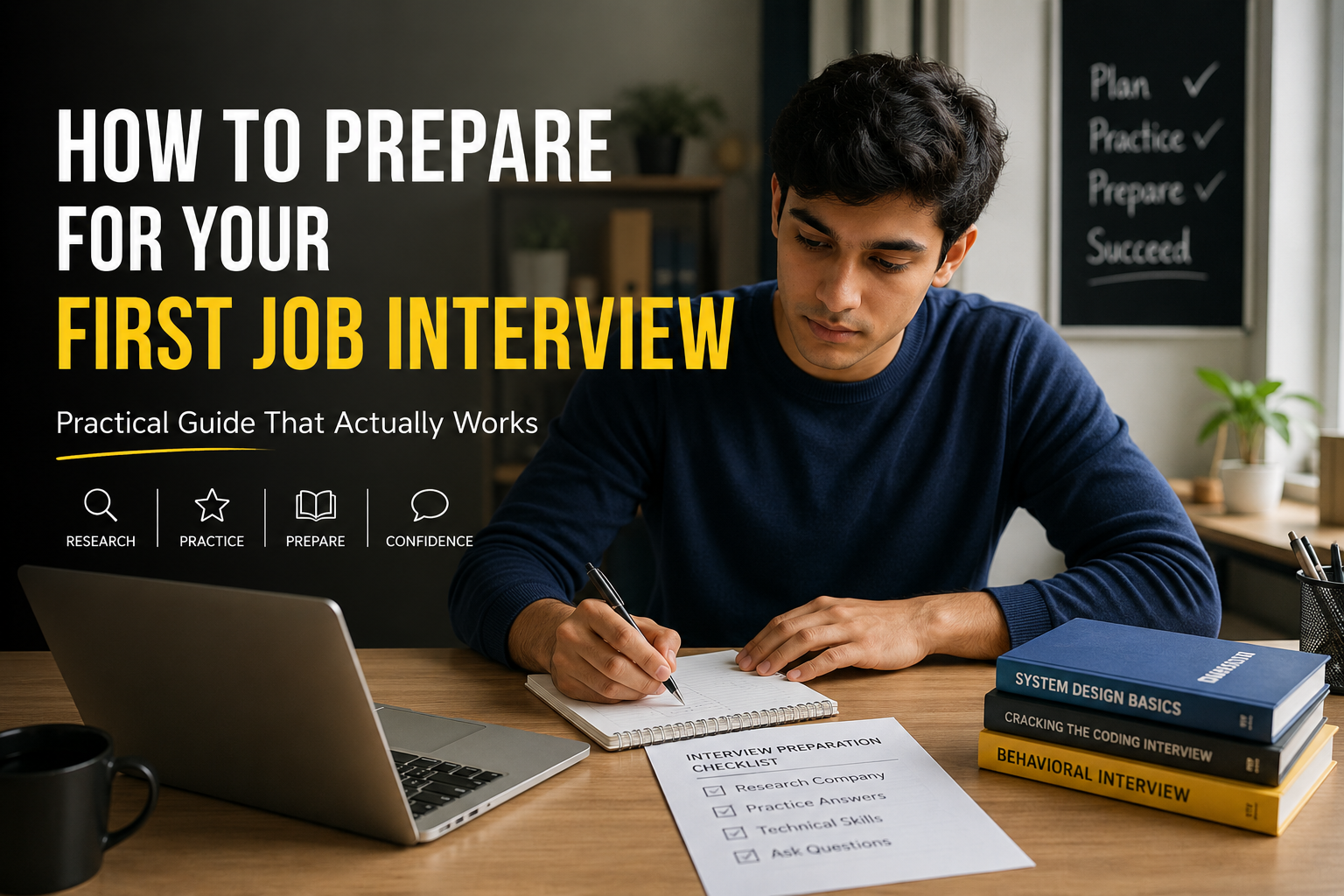
Your first job interview is a milestone moment. It's natural to feel nervous, but with the right preparation, you can walk in with confidence and leave a lasting impression. This guide walks you through everything you need to know — from researching the company to answering common questions and following up afterward.
According to a 2026 survey by the Society for Human Resource Management, 83% of hiring managers say that interview preparation is the single most important factor in determining whether a candidate gets hired. The candidates who prepare thoroughly are not only more confident but also more likely to articulate their value effectively.
1. Research the Company Inside Out
Before you walk into any interview, you need to understand the company you're applying to. This isn't just about looking at their website — it's about knowing their mission, culture, recent news, and competitors.
What to Research:
- Company mission and values: What does the company stand for? How do they describe their culture?
- Recent news and achievements: Have they launched a new product? Expanded to a new market? Won any awards?
- Key competitors: Who are their main competitors, and how do they differentiate themselves?
- The role you're applying for: Understand the job description inside out. What are the key responsibilities and required skills?
- Your interviewer (if known): Look up their LinkedIn profile. What's their background? What do they care about?
Pro tip: Write down 3-5 things you genuinely admire about the company. You'll likely be asked, "Why do you want to work here?" and having a specific, authentic answer will set you apart from candidates who give generic responses.
2. Understand the Interview Format
Interviews come in different formats, and knowing what to expect helps you prepare effectively.
| Interview Type | What to Expect | How to Prepare |
|---|---|---|
| Phone/Screening Interview | 15-20 minute call with HR or recruiter | Practice your "tell me about yourself" pitch; speak clearly and concisely |
| Video Interview | Virtual meeting via Zoom, Teams, or Google Meet | Test your tech; ensure good lighting and a professional background |
| In-Person Interview | Face-to-face at the company office | Plan your route; arrive 10-15 minutes early; dress professionally |
| Panel Interview | Multiple interviewers asking questions | Maintain eye contact with all panel members; address the person who asked the question first |
| Behavioral Interview | Questions about past experiences using the STAR method | Prepare 5-7 STAR stories about challenges, achievements, teamwork, and problem-solving |
3. Master the Most Common Interview Questions
While every interview is unique, certain questions appear in almost every first interview. Here are the top 10 questions and how to answer them effectively:
Tell me about yourself
Keep it to 2-3 minutes. Cover your background, key achievements, and why you're interested in this role. Focus on what's relevant to the job.
Why do you want to work here?
Show you've researched the company. Mention specific projects, values, or culture aspects that appeal to you. Connect it to your career goals.
What are your strengths and weaknesses?
Choose strengths that are relevant to the role. For weaknesses, pick a genuine area you're working on and explain how you're addressing it.
Why should we hire you?
Summarize your unique value proposition. What skills, experiences, or qualities do you bring that others don't? Be confident but not arrogant.
Describe a challenge you've overcome
Use the STAR method: Situation, Task, Action, Result. Be specific about what you did and the outcome you achieved.
Where do you see yourself in 5 years?
Show ambition but keep it realistic. Mention how you see yourself growing within the company or industry. Avoid generic answers.
4. Prepare Your Questions for the Interviewer
Asking thoughtful questions at the end of the interview shows you're genuinely interested in the role and the company. Here are 8 smart questions to consider:
- What does success look like in this role in the first 90 days?
- What do you enjoy most about working here?
- How would you describe the company culture?
- What are the biggest challenges the team is facing right now?
- What opportunities are there for professional development and growth?
- How does the team collaborate and communicate?
- What are the next steps in the hiring process?
- Is there anything about my background that gives you hesitation? (This last one is bold but can help you address concerns directly.)
5. What to Wear to Your First Interview
Dressing appropriately signals professionalism and respect for the opportunity. Research the company's dress code, but when in doubt, it's always better to be slightly overdressed than underdressed.
| Industry | Recommended Attire |
|---|---|
| Corporate (Finance, Law, Consulting) | Full business formal: suit, button-down shirt, dress shoes |
| Tech, Startup, Creative | Business casual: smart jeans or chinos, collared shirt or blouse, clean sneakers or dress shoes |
| Education, Healthcare, Non-Profit | Business casual to formal: neat and professional, comfortable yet polished |
| Retail, Hospitality, Service | Business casual: clean, neat, and professional; avoid anything too casual like shorts or t-shirts |
6. The Day Before the Interview
- Review your resume and be prepared to discuss any part of it in detail.
- Plan your route and confirm the interview location and time. If virtual, test your camera, microphone, and internet connection.
- Prepare your outfit and ensure it's clean and ironed.
- Print extra copies of your resume and a list of references (even if you've already submitted them).
- Get a good night's sleep — being well-rested helps you think clearly and stay calm.
- Prepare your questions and write them down so you don't forget.
7. The Day of the Interview
- Eat a good breakfast to keep your energy up.
- Arrive 10-15 minutes early — punctuality shows respect and gives you time to compose yourself.
- Be polite to everyone you meet — receptionists, security guards, and other employees. They often share their impressions with the hiring team.
- Bring a notebook and pen to take notes.
- Turn off your phone or put it on silent.
- Smile, make eye contact, and offer a firm handshake (or warm greeting if virtual).
8. After the Interview: The Follow-Up
Your interview isn't over when you walk out the door. A thoughtful follow-up can leave a lasting positive impression and even tip the scales in your favor.
- Send a thank-you email within 24 hours. Address it to the interviewer(s) and mention something specific you discussed.
- Reiterate your interest in the role and briefly summarize why you're a great fit.
- Keep it concise — 3-4 short paragraphs is perfect.
- If you haven't heard back in a week, send a polite follow-up email asking for an update.
Subject: Thank You – [Your Name] – [Job Title] Interview
Dear [Interviewer Name],
Thank you for taking the time to speak with me today. I enjoyed learning more about the [Job Title] role and the team at [Company Name].
Our conversation about [specific topic discussed] reinforced my enthusiasm for this position. I'm confident that my experience in [relevant skill/area] would allow me to contribute meaningfully to the team.
Please let me know if you need any additional information. I look forward to hearing from you.
Best regards,
[Your Full Name]
[Your Phone Number]
9. Common First Interview Mistakes to Avoid
- Not doing enough research — going in without knowing the company's basics is a red flag.
- Giving generic answers — personalize your responses with specific examples.
- Speaking negatively about past employers — this reflects poorly on you.
- Talking too much or too little — aim for balanced, thoughtful responses.
- Forgetting to ask questions — not having questions shows a lack of interest.
- Checking your phone — stay focused and present.
- Not following up — a thank-you email is a simple but powerful way to stand out.
10. Final Thoughts
Your first job interview is an opportunity to showcase your potential, not just your past experience. Remember that the interviewer wants to see you succeed — they're not trying to trip you up. They're looking for someone who is qualified, enthusiastic, and a good fit for their team.
Key takeaways to remember:
- Research the company and the role thoroughly.
- Practice answers to common questions out loud.
- Prepare thoughtful questions to ask the interviewer.
- Dress appropriately and arrive early.
- Follow up with a thank-you email within 24 hours.
- Be yourself — authenticity is memorable and appreciated.
Good luck! With the right preparation, you'll walk into that interview with confidence and leave a lasting impression. 🚀